Renwick Evans and Associates
  • Blog Home
  • Categories
    • Startup Launch Guidance
    • Cash Flow, Funding & Capital Strategies
    • Business Operations, challenges & Solutions
    • Merchant Processing & Payments
    • Business Marketing That Works
    • Business Growth & Scaling
    • Business Consulting Insights
    • Compliance & Risk Management
  • Home
July 13.2026
1 Minute Read

How to Secure Funding for a Brand-New LLC

Did you know that nearly 40% of small businesses in the United States cite llc startup funding as the primary reason they fail within their first year? This guide cuts through the confusion and reveals every step, platform, and pitfall you need to know so your brand-new LLC has the best chance for long-term success.

Confident small business founders collaborate on LLC startup funding strategies in a modern co-working space around a laptop and financial paperwork, with coffee mugs, plants, and sunlight ambiance.

Unlocking Success: Surprising Facts About LLC Startup Funding

Did You Know? Most Small Businesses Struggle With Startup Funding in Their First Year

Understanding the reality behind startup financing is the first step toward mastering llc startup funding. It's surprising but true—most small business owners find themselves scrambling for capital within their first twelve months. Cash flow shortages, insufficient reserves, and mistimed applications for business loans can sink even the most promising ventures early on. In fact, according to the Small Business Administration, a lack of available funding continues to be a leading factor in new business closures nationwide.

Despite a wealth of business loan options and creative solutions like credit cards or lines of credit, entrepreneurs often underestimate the challenges of raising enough capital at launch. Many new LLCs don't realize that building business credit, preparing a solid business plan, or strategically using personal funds can directly influence approval rates and interest rates on loans. By addressing these issues head-on, you’ll put your LLC on a much stronger financial footing from day one.

What You'll Learn in This Guide to LLC Startup Funding

  • Key sources for llc startup funding

  • How to evaluate funding options for small business

  • Tips for optimizing your business loan application

  • Expert advice and common mistakes to avoid

Understanding LLC Startup Funding for Small Businesses
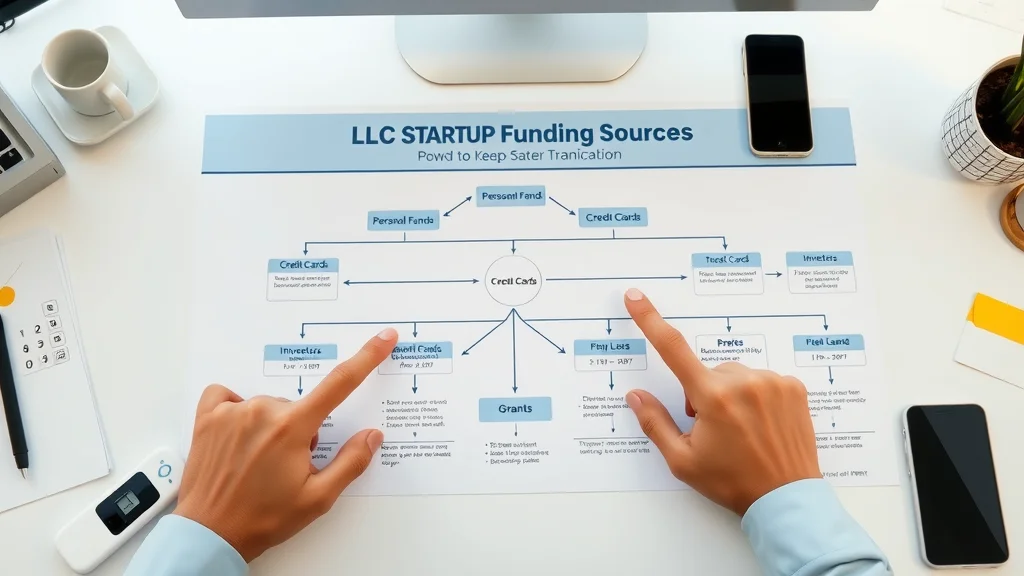
Infographic illustrating top LLC startup funding sources such as personal funds, loans, credit cards, investors, and grants, displayed as a flowchart with hands pointing at different paths on a sleek white desk.

Why LLC Startup Funding Matters for Small Businesses

Navigating the funding landscape is mission-critical for any new business. LLC startup funding ensures your company has the working capital to pay initial bills, purchase inventory, hire talent, and market effectively to attract customers. Effective funding isn’t just about getting enough cash; it's about securing the right type at the right terms for your long-term growth.

For small business owners, funding decisions can impact ownership structure, operational flexibility, and even day-to-day cash flow management. Choosing between a traditional business loan, personal funds, or a flexible line of credit can decide whether opportunities are seized or missed in those crucial early months.

Types of Small Business Entities and Their Funding Challenges

LLCs, S Corps, and sole proprietorships all face unique obstacles in the funding race. While LLCs benefit from legal protection and credibility, lenders and investors frequently need to review personal guarantees or detailed business plans before approving funding. With each structure, requirements such as personal credit history, a strong credit score, and organized business documents play an outsized role.

Credit card companies and traditional lenders may be more lenient with well-documented LLCs, but the competition for bank loans and alternative capital remains fierce, especially for high-growth or riskier sectors. Knowing which funding types suit your business entity—from sba loans to crowdfunding—maximizes your success.

"Securing the right funding is often the difference between a thriving small business and one that never opens its doors." – Small Business Advisor

As you consider the best funding approach for your LLC, it's also important to understand how your business structure and legal foundation can impact your financing options. For a deeper dive into building a resilient small business from the ground up, including legal and operational strategies, explore this comprehensive resource on guidance for building a strong small business.

Personal Funds: The Foundation of LLC Startup Funding

Thoughtful entrepreneur reviews personal savings and bank statements with a calculator at a home office, planning for LLC startup funding using personal funds.

Advantages and Disadvantages of Using Personal Funds for Small Businesses

Using your own savings remains one of the most direct methods to get your LLC off the ground. With personal funds, there's no waiting for lender approvals, no interest rates to worry about, and ownership remains squarely in your hands. You gain autonomy over every decision and can pivot quickly without external oversight.

However, self-funding is risky—draining your reserves can put personal finances and future stability on the line. For small business owners, the pressure to succeed mounts when family savings or retirement accounts are involved. Additionally, without leveraging debt, you miss early opportunities to build business credit or qualify for future business loans. Weigh these pros and cons carefully before tapping into personal resources for llc startup funding.

Business Loans and SBA Loans for LLC Startup Funding

Professional loan officer and small business owner shake hands over business loan documents in a bright bank office, formalizing sba loan funding for an LLC.

How to Qualify for a Small Business Loan

Securing a small business loan hinges on preparation and a solid financial track record. Lenders closely examine your business plan, projected cash flow, collateral, and credit score. A clear operational roadmap convinces banks and the Small Business Administration that your LLC is both viable and sustainable.

To boost your odds, gather comprehensive documentation—articles of incorporation, tax returns, detailed revenue forecasts, and evidence of business insurance. For LLCs, a strong separation between personal and business finances strengthens your application and increases your credibility with loan officers. Remember, every lender will review your payment history, business credit, and sometimes personal credit, so it's vital to keep accounts organized and in good standing.

Applying for a SBA Loan vs. Traditional Business Loans

SBA loans are among the most sought-after funding sources due to favorable interest rates and extended repayment periods. Backed by the federal government, the Small Business Administration guarantees a portion of the loan, making it easier for small businesses to qualify—especially those with limited assets or a shorter history.

In contrast, traditional business loans often require higher credit ratings, may charge steeper interest, and involve shorter terms. However, approval times can be quicker, and collateral requirements may vary. It's important to compare both options: use the SBA's official website for eligibility requirements and local banks' resources for detailed rates. Knowing which loan suits your LLC's stage and goals helps prevent over-leveraging and sets a solid foundation for growth.

Comparison of Business Loan and SBA Loan Options for LLC Startup Funding

Criteria

SBA Loan

Traditional Business Loan

Eligibility

Flexible for new businesses, must meet SBA guidelines

Strict credit and financial history requirements

Interest Rate

Lower, often fixed, subsidized by federal government

Typically higher and variable

Approval Time

4-12 weeks

1-4 weeks

Collateral Needed

Sometimes required

Usually required

Repayment Terms

Up to 25 years

5-10 years standard

Business Credit Cards and Lines of Credit: Flexible LLC Startup Funding

Building Business Credit for Your LLC

Ambitious small business owner establishing business credit by holding a new business credit card, working in a contemporary office with positive energy.

Establishing strong business credit unlocks a host of privileges, from higher lending limits to lower costs on business loans and credit cards. Start by registering your LLC with the major business credit bureaus, opening a dedicated business bank account, and applying for a business credit card in your company’s name. Consistently using and repaying these accounts builds a separate credit profile, independent from your personal credit history.

As your credit improves, lenders will view your business as a less risky proposition, widens the pool for more diverse and larger funding products—whether it’s a business line of credit, credit cards, or inventory loans. For new LLCs, good business credit isn't just about borrowing: it influences vendor terms, insurance rates, and your overall negotiating power.

Choosing Between a Business Credit Card and a Line of Credit

Both business credit cards and lines of credit offer valuable flexibility for startup funding, but they serve different purposes. A business credit card is ideal for day-to-day expenses, travel, and building business credit—offering rewards and convenience, but typically with higher interest rates on unpaid balances. In contrast, a business line of credit acts more like a safety net, letting you borrow up to a certain limit and repay only what you use (with lower rates), perfect for covering short-term cash flow gaps or purchasing inventory ahead of peak seasons.

Evaluate your LLC’s spending patterns and repayment discipline. While credit cards can help maximize vendor discounts and streamline expense tracking, a line of credit provides peace of mind for larger, unforeseen needs. Many small business owners combine both to stabilize cash flow and foster growth.

Venture Capital and Angel Investors: Advanced LLC Startup Funding

What Venture Capitalists and Angel Investors Look For in Small Businesses

Entrepreneur enthusiastically pitching a small business to a panel of venture capitalists and angel investors in an elegant boardroom with city views.

If your LLC is built for rapid growth or innovation, seeking funding from venture capitalists or angel investors can supercharge your launch. Both groups look for polished business plans, scalable models, and compelling value propositions. While venture capital tends to back companies with significant market disruption and potential for fast returns, angel investors often provide early-stage funding and mentorship.

Showcasing a capable management team, a clear go-to-market strategy, and early customer interest are crucial. Investors also want to see you have “skin in the game"—having already invested your personal funds and demonstrating operational discipline. If you can prove solid traction, responsible cash flow management, and a data-driven approach, your LLC becomes a much more attractive investment.

Steps to Attract Venture Capital or Angel Investors

Start by refining your pitch and business plan to clearly outline the problem you solve, your differentiation, and potential returns for backers. Network within your industry—attend pitch events, join local business incubators, and leverage online platforms that connect small business owners with investors. Prepare robust financial projections and have answers for questions about exit strategies, equity, and ownership structure.

Build credibility by landing early customers or demonstrating growth using your own resources. Consider strategic partnerships and continuously refine your pitch based on investor feedback. Remember: responsiveness and transparency set you apart!

"Angel investors invest in founders as much as ideas—credibility matters!" – Veteran Venture Capitalist

Alternative Funding Sources for Small Businesses and LLC Startup Funding

Grants, Crowdfunding, and Other Options for Small Business Growth

Multicultural entrepreneurs celebrate successful small business crowdfunding campaign at a laptop, set in a studio with creative decor and celebratory confetti.

If traditional loans or investors aren’t a fit, there are still creative funding avenues for new LLCs. Grants from local and federal government programs don’t require repayment, but are highly competitive and often targeted to specific industries, demographics, or geographic areas. Investigate the Small Business Administration and official government websites for available opportunities.

Crowdfunding on sites like Kickstarter or GoFundMe allows you to raise capital directly from future customers in exchange for early products or perks. This not only generates cash but also validates your idea in the marketplace. Other options include peer-to-peer lending, business incubators, and community development financial institutions (CDFIs). Each pathway has its own application process, eligibility, and timeline, so research thoroughly and prepare compelling materials.

Animated explainer: Expert-funded advice for securing LLC startup funding, with modern graphics and upbeat narration highlighting step-by-step tips, proven strategies, and key do’s & don’ts.

People Also Ask

Can LLC get grants for startups?

Answer: Grants are available to some LLCs, but eligibility depends on business type, industry, and grantor requirements. Most grants require strong business plans and clear community impact. Explore government databases and local programs for opportunities.

What is the monthly payment on a $50,000 business loan?

Answer: Monthly payments for a $50,000 business loan vary based on term length, interest rate, and lender. Typically, with a 5-year term at 8% annual interest, payments might be around $1,013 per month. Use a business loan calculator to get an exact figure.

How to get funding for a startup LLC?

Answer: LLCs can secure funding through personal funds, business loans, credit cards, lines of credit, venture capitalists, angel investors, and grants. Strengthen your business plan, establish business credit, and research all available options.

What is the 50 100 500 rule startup?

Answer: The 50/100/500 rule is a guideline for tracking user engagement in early startups: 50 active users/day, 100 sign-ups/week, 500 total users. It's a benchmark for assessing traction and readiness for investment.

Lists: 10 Steps to Secure Your LLC Startup Funding

  1. Develop a solid business plan

  2. Assess your personal and business credit

  3. Estimate your startup costs

  4. Explore small business grants

  5. Research and compare business loan options

  6. Build relationships with local lenders

  7. Apply for a business credit card

  8. Build business credit history

  9. Pitch to angel investors and venture capitalists

  10. Monitor cash flow and repayment terms

Entrepreneur checks off LLC startup funding steps on a planner at a tidy desk, managing a proactive checklist for business launch.

FAQs About LLC Startup Funding and Small Business Loans

What are the best alternatives to traditional business loans for LLCs?

The best alternatives include crowdfunding, business grants, peer-to-peer lending, business credit cards, lines of credit, and pursuing angel investors. Each offers unique benefits depending on your LLC’s stage, industry, and growth potential. Carefully review costs, eligibility, and how each will impact your company’s financial flexibility.

How long does it take to get approved for a small business loan?

Approval timelines vary: traditional business loans take 1–4 weeks, while SBA loans may take 4–12 weeks due to more extensive documentation requirements. Online lenders and alternative financing options can offer faster decisions, but always check for additional fees or higher interest rates.

Do I need a business credit score to qualify for a business credit card?

Most issuers prefer you have some business credit history, but many will use your personal credit score—especially for new LLCs. Establishing an EIN and separating business from personal finances will make it easier to qualify and grow your funding options over time.

Key Takeaways from This LLC Startup Funding Guide

  • LLC startup funding options vary widely: research what's best for your business

  • Building business credit is crucial for future growth

  • Small businesses can combine funding sources for greater flexibility

  • Expert advice and thorough preparation boost your approval chances

Diverse small business team celebrates successful LLC launch in front of new office with an open sign, balloons, and confetti at golden hour.

Conclusion: Start Your LLC Journey with Smart Funding Decisions

"Entrepreneurs who understand their funding options build stronger, more resilient small businesses."

Securing the right LLC startup funding means researching, planning, and taking proactive steps to support long-term results. Choose wisely—your business's future depends on it!

As you move forward with your LLC funding journey, remember that a strong legal and operational foundation is just as vital as financial resources. If you're ready to take your business to the next level, discover additional strategies for building a resilient company, protecting your assets, and navigating the complexities of small business ownership by visiting this in-depth guide on building a strong small business. Unlock expert insights that can help you avoid common pitfalls and position your LLC for sustainable growth and long-term success.

Ready to Launch? Call for a Free Consultation at 214-854-9931

Take the guesswork out of your LLC startup funding. Call for a complimentary consultation at 214-854-9931 and discuss your options with a small business funding expert.

Animated explainer: See the most frequent errors first-time LLC owners make in securing startup funding and how to avoid them.


Cash Flow, Funding & Capital Strategies

Write A Comment

*
*
Please complete the captcha to submit your comment.
Related Posts All Posts
07.06.2026

Startup Funding vs Bootstrapping: What’s Smarter Early On

Is chasing venture capital for your startup a ticket to rapid growth, or is building from the ground up with bootstrapping a smarter path to success? This dilemma nags at every new entrepreneur, shaping business models and strategies long before the first product launch. In a landscape crowded with both fairy-tale unicorns and self-made titans, knowing which path is best for your early-stage startup can be the difference between scaling fast—or failing fast.Is Startup Funding vs Bootstrapping Still a Dilemma for New Entrepreneurs?The question of startup funding vs bootstrapping is more relevant than ever. Today’s landscape is filled with both funded companies attaining rapid growth and bootstrapped startups innovating with lean operations. For early-stage founders, choosing between securing backing from venture capitalists or going it alone with personal savings isn’t just a financial decision—it's a choice that impacts control, ownership, and your business's entire DNA.Whether inspired by Silicon Valley’s legendary VC funding stories or drawn to the autonomy of building a bootstrapped business, entrepreneurs confront substantial pros and cons with each approach. Understanding these is essential to make informed decisions that match your long-term vision and resource needs. This article breaks down the real differences, reveals industry insights, and shows how your choices now can shape your company’s destiny.Debunking Myths: Startup Funding vs Bootstrapping in the Modern Startup EcosystemMany believe that only venture capital-backed companies can achieve spectacular, industry-defining success, while bootstrapped startups are doomed to slower growth and limited impact. In reality, the modern startup ecosystem is vast and diverse, with business models evolving well beyond old stereotypes. Both paths offer successful startup case studies—and both present unique sets of advantages and disadvantages that must be weighed against market dynamics, personal risk tolerance, and growth ambitions.Some of today's most recognized companies started as bootstrapped businesses before attracting external investors, while others have flourished thanks to early capital funding. Understanding these nuances is critical for entrepreneurs evaluating their launch strategy in the current competitive climate.As you weigh the pros and cons of each approach, it's also important to consider the foundational steps that support any business model. For practical guidance on establishing a resilient company structure—regardless of your funding path—explore these key strategies for building a strong small business that can help set your venture up for long-term success.What You’ll Learn: Unlocking Insights on Startup Funding vs BootstrappingKey differences between startup funding vs bootstrappingDetailed pros and cons of each approachImpact on control and ownershipThe role of venture capital and significant capitalGrowth trajectories for both funded companies and bootstrapped startupsHow to assess which path aligns with your business visionDefining Startup Funding vs Bootstrapping: Fundamentals Every Entrepreneur Should KnowUnderstanding the fundamentals of startup funding vs bootstrapping is a crucial first step when starting a business. These methods not only influence your access to significant capital, but also shape long-term control, ownership, and business decisions. In this section, we'll define each approach, clarify types of capital funding, and lay the groundwork for the advantages and disadvantages explored later.The choice you make now can set the stage for rapid growth or steady, sustainable development. Knowing what each method entails helps you choose the route that matches your product, industry, and risk tolerance.What is Startup Funding?Startup funding refers to obtaining financial backing from external investors such as venture capitalists, angel investors, or even through crowdfunding platforms. Usually, this capital is provided in exchange for equity, a share of your company’s future successes, and sometimes a seat at the decision-making table. With VC funding, startups can access significant capital early on—a powerful advantage in industries where scaling rapidly is essential.However, this money comes with expectations: investors often seek rapid growth, market dominance, and clear paths to exit. When you opt for startup funding, you're not just raising capital; you're also inviting new perspectives, oversight, and sometimes the need to compromise on your original vision for the sake of investor returns or accelerated timelines.Direct Investment: Venture Capital, Angel Investors, and CrowdfundingVenture capital and angel investors have long been cornerstones of early-stage startup finance. Venture capital funds typically invest millions in exchange for considerable equity stakes, hoping those companies will achieve unicorn status and deliver strong returns. Angel investors, on the other hand, are often experienced founders or industry experts who provide smaller capital infusions, mentorship, and valuable networks.Crowdfunding is another direct investment path, enabling founders to raise capital from a broad mix of backers via platforms like Kickstarter or Indiegogo. Each form of investment provides varying capital amounts, degrees of oversight, and expectations, making them suitable depending on your business model, ambitions, and appetite for shared ownership and influence.What is Bootstrapping?Bootstrapping means starting a business primarily with personal savings, resources from friends and family, or early customer revenues—rather than relying on external investors. This self-funded approach demands entrepreneurial creativity, strict budgeting, and often, slower growth in the early stages. Bootstrapped startups are built on resourcefulness, so business decisions must be guided by necessity and discipline rather than by abundant capital.Bootstrapping doesn't mean you can’t scale or succeed. Many entrepreneurs choose to bootstrap in order to retain complete control and ownership. Every decision reflects their vision, without external investor expectations steering choices or product direction. For founders valuing autonomy or with business models that don’t require heavy capital investment, bootstrapping can be both viable and rewarding.Growing a Bootstrapped Startup From the Ground UpThe essence of a bootstrapped startup is efficiency. Growth happens by reinvesting profits, keeping operations lean, and focusing on what matters most: building a product customers truly want. Early success stories show that prioritizing customer feedback, limiting overhead, and maintaining financial discipline can lead to lasting success—even in competitive fields. While constrained by limited resources, bootstrapped businesses develop agile mindsets and a culture of resilience that can serve them well as they scale.Venture Capital: Access to Significant Capital and Rapid GrowthSecuring venture capital is often seen as the shortcut to rapid growth—a way for startups to leap ahead of competitors by leveraging significant capital and industry expertise. VC investment doesn’t just provide funding; it connects founders to influential networks, mentorship, and exposure within the global business community. However, rapid scaling comes with new pressures: expectations of fast revenue growth, high returns, and eventual profitable exits.In sectors where speed-to-market is everything—think software, biotech, and e-commerce—venture capital can be the fuel for immediate expansion and ambitious hiring. But it’s vital to understand the operational shifts and sacrifices in control and ownership that come when you access significant external funding.Types of Startup Funding and How Venture Capital WorksVenture capital isn’t the only way to raise capital funding, but it is one of the most powerful. Startups can also approach angel investors, participate in accelerator programs, or tap into networked syndicates. Each offers unique scales of investment, angles of support, and involvement in business decisions. Venture capital funds typically invest in several stages—seed, Series A, B, C, and beyond—each with increasing funding and oversight requirements.For most VC-backed startups, funding trades equity for access to significant capital and resources. In return, investors have influence over major decisions and expect eventual lucrative exits—either through acquisition, IPO, or mergers. Understanding the mechanics of VC funding is critical for any entrepreneur planning rapid growth and large-scale market entry.Advantages of Raising Venture Capital for Funded CompaniesPartnering with a venture capital fund provides startups with instant legitimacy and growth firepower. Funded companies often benefit from expert advice, powerful mentorship, and strategic partnerships. With major investment behind you, product development accelerates, key hires happen quickly, and marketing budgets soar. If market dominance is the goal, there’s no faster path than matching significant capital with an ambitious team.Additionally, VC funding brings visibility, which helps attract future clients, key hires, and even more investors. For entrepreneurs whose business models require substantial up-front investment—think advanced tech or nationwide retail launches—VC funding can mean survival, not just success.Rapid Growth and Expansion PotentialThe main selling point of VC funding is the ability to achieve rapid growth. Startups can scale operations swiftly, expand to new markets, and outpace slower-moving competitors. Many of today’s unicorns—companies valued at over $1 billion—got there through aggressive VC investments in technology, sales, and infrastructure. For founders with high-stakes visions and time-sensitive opportunities, venture capital can make the impossible possible.Challenges and Disadvantages: Control and Ownership Trade-OffsPursuing venture capital comes with undeniable risks and drawbacks. Accepting investments means giving up a portion of your company to external investors, which means shared decision-making and a loss of some autonomy. As VCs and angel investors seek to maximize returns, they often push for rapid market capture, aggressive product pivots, and strict cost controls—sometimes at the expense of the founder’s long-term vision. If the relationship with your investors becomes strained, the startup can lose focus or even collapse under conflicting priorities.Other disadvantages include legal complexities, ongoing pressure to hit growth milestones, and the ever-present expectation of a profitable “exit. ” Founder burnout is a real risk, as the company culture shifts to satisfy growth targets above all else. Entrepreneurs should recognize these trade-offs before taking the VC plunge.Investor Influence and Exit ExpectationsExternal investor influence manifests in board seats, voting power, and input into major business decisions. Most investors fund startups with clear exit expectations—being acquired or going public—within a specific window (typically 5–7 years). This can force founders into growth-at-all-costs cycles or strategic shifts they hadn’t envisioned, making it vital to negotiate terms that balance access to significant capital with your own values and goals.“Access to significant capital can be a catalyst for growth, but always comes with expectations.” – Startup AdvisorBootstrapping: The Path of the Bootstrapped Startup and Bootstrapped BusinessChoosing to bootstrap is about staying nimble and independent. A bootstrapped startup prioritizes incremental progress over rapid growth, often driven by necessity and passion rather than abundant resources. The path demands personal investment—both financially and emotionally—but rewards founders with a sense of ownership and resilience.Bootstrapped businesses flourish through ingenuity, focusing on core competencies and customer relationships rather than flashy launches or massive advertising spends. For many, starting lean enables stronger long-term foundations when compared to venture-backed counterparts.Advantages of Bootstrapping for Early-Stage EntrepreneursGoing the bootstrapped startup route delivers several key benefits for early-stage founders. Chief among them are complete control over all business decisions and the ability to shape company culture without outside interference. With no investors to answer to, every choice reflects the founder's own judgment and vision. Lean operations force careful spending and innovation, often resulting in products and services that are highly attuned to actual market demands.This approach also leads to greater ownership—you keep more of your company's equity, reaping larger rewards as your business grows. Many groundbreaking brands, including Mailchimp and Basecamp, were built using these principles—proving that bootstrapping, while demanding, is far from a barrier to success.Full Control, Ownership, and Lean OperationsRetaining complete control and ownership empowers founders to move quickly, pivot strategies, and build cultures true to their vision. By avoiding external investors, bootstrapped businesses can take calculated risks that reflect their unique understanding of their industries. Budget constraints often lead to creative problem-solving and agile, lean operations—a recipe for resilience, especially during downturns or market shifts.Disadvantages and Constraints: Limited Significant CapitalThe flip side to autonomy is resource scarcity. Bootstrapped startups face obvious constraints—limited capital for R&D, marketing, and talent acquisition. This can translate to slower growth, especially when competing against funded companies. Without significant capital infusions, bootstrapped businesses must choose their projects and hires carefully, often delaying big launches or expansion plans until revenues grow organically.Founders face personal financial risk, as much of the initial investment comes from their savings or loans. The absence of institutional mentorship and external validation adds further pressure and sometimes isolation, making it harder for these businesses to weather crises or react quickly to industry changes.Risk Management and Slow GrowthWhile bootstrapping is praised for encouraging resilience, it also imposes strict risk management constraints. Growth tends to be gradual, which can be frustrating in fast-moving markets or when competitors leverage capital funding to seize large market shares quickly. Success relies on the founder's ability to make shrewd financial decisions, prioritize customer feedback, and develop sustainable, organic strategies for long-term survival.“Bootstrapping means staying scrappy but owning every decision.” – Bootstrapped FounderStartup Funding vs Bootstrapping: Comprehensive Pros and ConsWeighing the pros and cons of startup funding vs bootstrapping is essential before committing to either path. The decision will have far-reaching implications on your company’s structure, growth potential, and even daily operations. The following table provides a side-by-side comparison to help you make an informed choice.CriteriaStartup Funding (VC, Angels, Crowdfunding)BootstrappingAccess to CapitalSignificant capital (rapid funding for scaling)Limited capital (personal funds, reinvested revenue)Growth RatePotential for rapid growth, aggressive scalingGradual, sustainable, organic growthControl & OwnershipEquity is diluted; external investor influenceComplete control and undiluted ownershipDecision-MakingShared decision-making, potential external pressureFounder-driven, highly flexibleRisksPressure for quick exit, possible loss of visionPersonal financial risk, slow access to resourcesMentorship & NetworksAccess to industry-leading advice and global networksLimited, unless founder is already well-connectedAdvantages and Disadvantages Roundup: Which Path Wins?Startup funding: quick access to resources, mentorship, and visibilityBootstrapping: autonomy, flexibility, low dilution of ownershipRisks: venture-backed startups face investor pressure, bootstrapped startups risk slow progressThe truth is, neither path is universally “smarter. ” Success depends on how the advantages and disadvantages of each align with your startup's goals, industry context, and long-term vision. A careful self-assessment is the best way forward.Control and Ownership: How Startup Funding vs Bootstrapping Impacts Your Startup’s DNAOne of the most crucial consequences of your early-stage funding choice is its effect on control and ownership. Startup funding typically requires sharing equity and board influence with external investors, fundamentally transforming the dynamic of business decisions. Bootstrapping, conversely, leaves you in the driver’s seat—protecting company culture, product vision, and day-to-day operations from outside interference.Ultimately, the balance of control, autonomy, and the speed of growth must fit both your business model and your personal leadership style.Dilution and Decision-Making: Effects in Funded CompaniesWhen raising capital from VCs or angels, you’re trading off equity stakes for immediate resources. Over successive rounds of funding, founder ownership can shrink dramatically. Board seats and voting power transfer to investors, who may prioritize rapid growth and exit strategies over organic scaling or mission alignment. For some, this is a fair trade-off; for others, it’s a deal-breaker.Entrepreneurs who value independence and long-term control should be hyper-aware of the implications and ensure investor relationships align with their term vision—since external investor pressures can redefine your company's core direction.Retaining Vision and Culture in Bootstrapped BusinessesBootstrapping preserves your ability to shape every decision, big or small. You can iterate quickly based on customer feedback, change direction without investor approval, and scale at a pace that feels sustainable. For mission-driven founders or those with unconventional ideas, maintaining autonomy may be the biggest advantage bootstrapping offers—protecting your brand, values, and the company’s long-term mission.There’s a trade-off, of course: with fewer resources comes slower growth and more limited market reach, but the freedom to execute your vision exactly as you see fit is an unparalleled reward for many bootstrapped founders.Rapid Growth vs Sustainable Scaling: Strategic Outcomes of Startup Funding vs BootstrappingThe type of capital you raise directly influences your startup's strategic trajectory. Startup funding specializes in helping companies achieve rapid market penetration, outpace rivals, and attract talent at scale. Bootstrapping encourages founders to prioritize sustainability, measured expansion, and organic revenue growth.Both approaches can result in successful startups—the key is aligning your business model and growth strategy with your available capital and leadership style.Achieving Rapid Growth through Significant CapitalVenture capital empowers startups to achieve rapid growth and occupy leading market positions. Access to significant capital enables faster hiring, infrastructure investment, aggressive customer acquisition, and brand-building initiatives. In industries dominated by first-mover advantages or network effects, this speed can spell the difference between category leadership and mediocrity.However, even as VC-funded companies race ahead, the pressure to deliver can breed unsustainable workplace cultures, frequent pivots, and a focus on short-term wins over long-term value. For some, it’s a price worth paying to become an industry giant.Bootstrapping for Sustainable, Organic Business GrowthFor founders who believe in the power of slow, deliberate scaling, bootstrapping offers an opportunity to build for the long haul. Success is measured in steady revenue, satisfied customers, and lasting relationships. Products improve iteratively with direct customer feedback, and financial discipline avoids risky overextensions.By choosing to bootstrap, founders retain the agility to shift focus, experiment with new ideas, and grow at a pace dictated by actual market demand rather than investor mandates. This strategy may cost speed, but it secures a stable foundation that can weather industry disruptions.Startup Funding vs Bootstrapping: Which is Smarter for Your Startup’s Stage?There’s no universal answer in the startup funding vs bootstrapping debate—it comes down to fit. Early-stage startups must weigh multiple factors: their industry, target market, available resources, and ultimate ambitions. Founders in fiercely competitive or capital-intensive markets may require VC investment to survive, while those in niche sectors or with sustainable business models can excel through bootstrapping.The choice isn’t always final, either—many businesses start bootstrapped and later attract outside capital when the time and opportunity match their growth stage.Key Considerations: Industry, Goals, and Resource NeedsMarket dynamics affecting early-stage decisionsProduct type: digital, physical, or serviceTeam strengths and existing resourcesYour personal goals—rapid growth, full control, or long-term legacy—should shape the funding strategy you pursue. Align your choice with your business model, available team skills, and realistic resource assessment to maximize your odds of sustainable success.Case Studies: Successful Funded Companies and Bootstrapped StartupsLooking to real-world examples can clarify which path might work best for your own entrepreneurial journey. Many of today’s most recognized brands took wildly different routes to success—some built empires with VC funding, while others rose steadily as bootstrapped businesses.Venture Capital Success: From Idea to UnicornCompanies like Uber and Airbnb are classic VC-backed stories—leveraging venture capital funding for fast expansion, global reach, and billion-dollar valuations. Both startups used initial seed rounds to build out technology, hire aggressively, and blitzscale into new markets—a feat unlikely without access to significant capital. Their stories show the upside of raising capital early: the ability to outpace rivals and dominate a category when first-mover advantage matters most.Bootstrapped Business Journeys: Longevity and LegacyBrands like Mailchimp, Basecamp, and GitHub reached impressive heights without outside money—prioritizing full control, customer-driven development, and a culture rooted in founder vision. Many bootstrapped startups find long-term financial stability and creative control more valuable than rapid scaling. Their journeys highlight the power of steady, organic growth—often leading to loyal customer bases, low-burn operations, and a sense of company legacy that lasts.Expert Insights: Choosing Startup Funding vs Bootstrapping According to Industry Leaders“The smartest path depends on your goals and risk tolerance. There’s no universal answer.” – VC PartnerIndustry leaders agree: the right decision balances ambition, resources, and personal risk appetite. Whether you seek rapid growth with venture capital or prefer the independence of bootstrapping, clarity on your goals is key.FAQ: Startup Funding vs Bootstrapping for New FoundersWhat are the main differences between startup funding and bootstrapping?Startup funding involves securing outside capital from VCs, angels, or crowdfunding, usually in exchange for equity and external influence. You gain resources and mentorship, but give up some ownership and control. Bootstrapping relies on personal savings and early revenues, conserving full ownership but often limiting your ability to scale quickly due to resource constraints.Is it possible to switch from bootstrapping to raising venture capital?Yes, many companies choose to bootstrap during the earliest stages to prove their business model and then seek venture capital as they’re ready for rapid growth. Investors often look favorably upon startups with a demonstrated revenue history and a validated market fit, making the transition feasible.What are the risks of relying solely on bootstrapping?Relying exclusively on bootstrapping means limited cash flow, which can slow development, hiring, and market entry. You face personal financial risk and may struggle to compete against better-funded rivals. However, you avoid dilution and retain full control over business decisions.How do I attract investors if I decide to pursue startup funding?To attract investors, develop a compelling business model, demonstrate traction (revenue, users, or pilot results), and present a clear growth strategy. A strong founding team, market opportunity, and a track record of resourceful execution greatly enhance your appeal to external investors.People Also Ask: Startup Funding vs BootstrappingWhat is the biggest advantage of bootstrapping over venture capital?Bootstrapping gives you full control and minimizes external interference, which can be vital for maintaining the original vision of your business.How much equity do you typically give up with venture capital?Equity stakes vary, but early rounds can range from 10% to 30%, sometimes more depending on negotiations and funding need.Key Takeaways: Startup Funding vs Bootstrapping in a NutshellBoth funding paths offer substantial benefits and risksBootstrapping emphasizes control at the cost of speedVenture capital can fuel rapid growth but at the cost of shared controlThe optimal choice depends on ambition, industry, and long-term visionWatch an animated explainer video outlining the differences, pros and cons, and scenarios for both startup funding and bootstrapping using engaging visuals and founder stories.Hear real-life stories from founders who have walked both paths. Learn from their successes, challenges, and what they'd do differently.Ready to Decide? Call for a Free Consultation at 214-854-9931Need help navigating your funding strategy? Call us at 214-854-9931 for a free, personalized consultation today!ConclusionThe choice between startup funding and bootstrapping shapes your company's growth and culture. Evaluate your goals, resources, and risk tolerance to find the smarter path for your unique vision.If you’re ready to take the next step in your entrepreneurial journey, remember that building a strong foundation is just as important as choosing the right funding strategy. Delving deeper into the essentials of small business success can provide you with the tools and confidence to navigate challenges ahead. For a broader perspective on legal, operational, and strategic best practices, consider exploring comprehensive guidance for building a resilient small business. This resource can help you future-proof your venture, no matter which growth path you choose.

06.23.2026

When to Use Business Lines of Credit in a New Company

Did you know that nearly 45% of small business failures are linked to cash flow issues? As a startup founder, understanding when and how to use a business line of credit can be a game-changer—and may even make the difference between thriving and shutting your doorsA Surprising Fact: The Role of Business Lines of Credit in Startup Success"Nearly 45% of small business failures are attributed to cash flow problems, making proper financing solutions critical for new companies." – National Small Business AssociationWhat You'll Learn About Business Lines of Credit for StartupsWhen to consider a business line of credit for startupsHow business lines of credit differ from other business financing optionsKey eligibility requirements for new companiesStrategic ways to use a business line of credit for cash flow and growthExpert answers to common startup funding questionsUnderstanding Business Lines of Credit for StartupsWhat is a Business Line of Credit?A business line of credit is a flexible financing tool designed to provide startups and small businesses with access to funds when they need it most. Unlike a traditional business loan, where you receive a lump sum and start paying it back with fixed monthly payments, a business line of credit acts more like a revolving account. This means you can draw funds as needed—up to your approved credit limit—and pay interest only on what you use. Many new companies consider business lines of credit for their adaptability, allowing them to address short-term cash flow gaps, purchase inventory, or cover unexpected expenses without reapplying for another loan. This flexible model provides critical support for working capital, particularly during the early growth stages of your startup.How Business Lines of Credit Work for StartupsWith a business line of credit for startups, entrepreneurs have ongoing access to funds, which can be withdrawn whenever necessary for business needs. After approval, the lender assigns a credit limit—the maximum amount you can borrow at any time. As you draw funds for expenses such as inventory purchases, payroll, or vendor payments, the available credit decreases. When you make monthly payments or repay the amount borrowed, your available credit line is replenished. You only pay interest on the amount used, not the full credit limit, making this a flexible financing option for managing fluctuating cash flow. Most business lines of credit feature variable interest rates and require the borrower to make regular payments, often monthly or weekly, on outstanding balances. This ongoing access makes it an ideal tool for startups balancing unpredictable revenue cycles or wanting to capitalize quickly on new opportunities.Business Line vs. Business Loan: Key Differences for StartupsFor startups, choosing between a business line of credit and a business loan can be confusing, but the two serve very different purposes. A business line of credit offers ongoing access to funds up to a specific credit limit and is repaid as you draw funds. In contrast, a business loan provides a one-time lump sum that you repay over a fixed period with set repayment terms. Lines of credit are often best for covering short-term cash flow needs or recurring expenses, while business loans are typically used for larger, long-term investments such as buying equipment or funding expansion. Cost structures, flexibility, and approval requirements also vary. The table below details these differences:CriteriaBusiness Line of CreditBusiness LoanFlexibilityHigh—draw funds as needed, repay and reuseLow—one lump sum, repaid over set termInterest RatesVariable, pay interest only on funds usedUsually fixed, pay on total amount borrowedRepayment TermsOngoing; payments due on drawn amountsFixed schedule, equal paymentsBest Use CasesCash flow, inventory, emergencies, small recurring expensesMajor equipment, renovations, long-term investmentsCore Benefits of a Business Line of Credit for StartupsFlexible financing solutions for evolving needsImproved cash flow management in early stagesAccess to funds without reapplying each timeLower interest rates compared to many credit cardsThe primary advantage of a business line of credit for startups is its unrivaled flexibility. Young companies often experience unpredictable revenue cycles, so having access to a revolving credit line means you can bridge gaps between receivables, take advantage of supplier discounts, or respond to abrupt challenges—such as repairs or staffing changes. Additionally, you aren’t locked into borrowing more than you need; you simply draw funds on demand and only pay interest on your outstanding balance. With lower rates than most credit cards, business lines of credit offer a cost-effective way to manage ongoing operational expenses and seize short-term growth opportunities without disrupting existing finances.As you explore the advantages of flexible financing, it's also important to understand how building a strong foundation can impact your startup's ability to secure and effectively use credit. For actionable steps on establishing a resilient business structure, consider reviewing guidance for building a strong small business to complement your financial strategy.When Should Startups Use Business Lines of Credit?Managing Startup Cash Flow with Lines of CreditCash flow management is one of the biggest obstacles facing new companies. Business lines of credit provide an efficient safety net that helps startups overcome late client payments, seasonal slumps, and other income interruptions. Rather than waiting on receivables or sacrificing growth momentum, founders can access funds instantly to cover salaries, inventory, or ongoing bills. Startups can often avoid costly late fees, build stronger supplier relationships, and take advantage of quick-turn business opportunities. Ultimately, a business line of credit transforms periods of uncertainty into manageable transitions, so you can focus your energy on scaling the business—not scrambling for funds.Short-Term Opportunities vs. Long-Term NeedsIt’s essential for founders to know when to leverage a business line of credit versus seeking out a traditional term loan or another financing option. Lines of credit shine when you need working capital for short bursts: hiring extra staff for a big project, stocking up for a busy season, or snagging a time-sensitive deal on supplies. Since you have fast access and only pay interest on what you use, it’s a tactical tool for navigating unforeseen fluctuations. But for long-term or larger capital investments, such as new equipment or buying real estate, business loans (term loans) with fixed repayment terms are usually a better fit due to their structure and potentially lower interest rates. Think of a business line of credit as your startup’s financial shock absorber—perfect for handling bumps rather than carrying a heavy load over the long haul.Covering Emergency or Seasonal Expenses for Small BusinessSmall businesses and startups frequently encounter urgent situations where having quick access to funds is vital. Whether you’re facing sudden repairs, a delayed client payment, or a surge in demand during a busier season, business lines of credit can bridge the financial gap. This flexibility is especially valuable for companies with fluctuating inventory needs or those operating in retail, hospitality, or services. Rather than maxing out a credit card at high interest or missing a payroll, a business line of credit allows you to cover the shortfall safely—and pay it back as revenue returns. This prevents disruptions and helps maintain steady growth even when the unexpected occurs.Bridging gaps in receivablesPurchasing inventory in advance of peak seasonsHandling sudden or unexpected costsManaging payroll during slow periodsEligibility: Qualifying for a Business Line of Credit for StartupsWhat Lenders Look For: Credit for Startups ExplainedQualifying for a business line of credit for startups is different from applying for personal loans or traditional business loans. Lenders assess several factors before approving a credit line, including your company’s time in business (often 6–12 months minimum), revenue levels, credit score (both business and personal), and how well-organized your finances are. For new businesses, lenders may scrutinize your business plan, financial projections, and the management team's experience. A strong business plan and demonstrated ability to manage cash flow go a long way in bolstering your application for credit for startups, enabling better approval odds and possibly higher credit limits.Minimum Credit Score and Business FinancialsMost lenders require a minimum credit score—typically ranging from 600 to 680—for a business line of credit. Some online lenders may approve startups with lower scores at higher interest rates, while established banks may demand even higher credit ratings or longer track records. Beyond your score, lenders will often request documentation of your business financials: recent bank statements, tax returns, sales records, and profit/loss reports. Startups should also be prepared to present personal guarantees, especially if short on operational history. Maintaining a separate business checking account, tracking expenses, and submitting detailed projections can bolster your chances of securing the line of credit and negotiating favorable terms.Using Your EIN As a Startup: What to KnowFor startups eager to establish business credit, your Employer Identification Number (EIN) is fundamental. Many lenders use your EIN to verify business legitimacy and track credit history separately from your social security number. However, for very young companies, your personal credit may still play a significant role in the lender’s decision unless you have an established business credit profile. Using your EIN for a business line of credit helps build credit over time, making it easier to qualify for larger limits and lower rates as your company grows, provided you manage payments responsibly."Strong business credit and a well-structured business plan can open doors to better financing options for startups."Business Line of Credit Application Process for New CompaniesStep-by-Step Guide: How to Apply for a Business Line of CreditApplying for a business line of credit as a startup involves several key steps to streamline the process and maximize approval odds:Check your credit score and business credit profileGather essential documentation: EIN, business plan, recent bank statements, tax returns, and financial forecastsResearch lenders—banks, online lenders, and credit unions may all offer different terms and qualification criteria suited for startupsComplete the lender’s application form, providing detailed financial data and a summary of your business modelSubmit for review; be ready to answer follow-up questions or provide additional materials to support your caseUpon approval, carefully review the offer—including credit limit, interest rates, and repayment termsSign the agreement and set up your account to access your business line of credit as neededEIN (Employer Identification Number)Well-prepared business planRecent bank statementsTax returns (personal and business, if available)Financial projections and revenue statementsBusiness Line of Credit for Startups: Interest Rates and Repayment TermsTypical Interest Rates for Startup Business Lines of CreditInterest rates for a business line of credit vary by lender and the financial health of your startup. Generally, rates range from 7% to 25% APR for startups, with online lenders sometimes charging more due to the perceived risk. Well-established businesses with strong financials might qualify for lower rates, while newer startups may see rates at the higher end. Startups should compare offers, taking into account not only interest rates but also potential fees, such as account maintenance or draw fees. Always confirm whether your interest is charged only on amounts drawn or on the entire credit line balance.Flexible Repayment Options: What to ExpectOne advantage of a business line of credit is repayment flexibility. Instead of rigid loan schedules, you can pay down what you owe and reuse available credit as your business needs evolve. Payments can be structured as weekly or monthly, with amounts varying according to your balance. Some products require minimum monthly payments (covering interest and a portion of the principal), while others allow for larger principal payments to reduce accrued interest. This flexibility can alleviate cash flow challenges and help avoid large lump-sum payments that could strain a young business.Understanding Your Credit Limit and How It’s SetYour credit limit is determined by factors such as your startup’s revenue, operational history, and creditworthiness. Lenders often start new businesses with smaller limits (e.g., $10,000–$50,000), but responsible use and strong payment history can lead to increases over time. The more you demonstrate your reliability—keeping balances well-managed and making on-time payments—the more you unlock opportunities for higher credit lines and lower interest rates. Startups should review limits regularly and share growth updates with lenders to negotiate improved terms as the business matures.Comparing Business Lines of Credit to Other Startup Financing OptionsCriteriaBusiness Line of CreditCredit CardInvoice FactoringSBA LoanApproval Time1–2 weeks (sometimes faster online)Instant to a few daysFew days to a week3–6 weeks (can be longer)Cost (APR)7%–25%15%–30%+1%–5% of invoice per month5%–14%FlexibilityHigh—use as needed, repay and reuseModerate—often smaller limits, usable as neededLimited—based on invoice volume onlyLow—fixed use, larger loans for set purposesRiskVariable rates; some personal guaranteeHigh rates; risk of high balancesRecourse if invoices unpaidCollateral and guarantees usually requiredHow Business Lines of Credit Support Startup GrowthLeveraging Working Capital for ExpansionSmart startups use business lines of credit as a growth catalyst. By tapping into working capital at critical junctures, you can launch marketing campaigns, buy extra stock to meet new contracts, or hire talent before increased revenues arrive. Lines of credit bridge the gap between opportunity and cash-on-hand, ensuring your business isn’t left behind when nimbleness is required. The boost in working capital gives your team the agility to respond quickly to market shifts and invest in initiatives that drive future growth.Building Business Credit Through Responsible UseUsing your business line of credit regularly, and making all payments on time, helps establish a positive business credit history. Over time, lenders will become more willing to extend higher limits and offer better terms to your startup. This opens doors to larger loans, favorable repayment terms, and new financing options. By maintaining strong relationships with your lenders and keeping business and personal finances separate, you build credibility not just with banks but also with suppliers and partners.Expert Insights: Choosing the Right Financing Option for Your Startup"Selecting the correct financing tool can shape your startup’s trajectory—business lines of credit often provide the flexibility needed for unpredictable early growth."With so many financing options—business loans, credit cards, invoice factoring, SBA loans—how do you choose? Experts recommend startups consider business lines of credit if they expect frequent small cash needs, wish to build business credit fast, or want backup for emergenciesPeople Also Ask: Business Line of Credit for Startups FAQsCan a startup business get a line of credit?Answer: Startups can qualify for a business line of credit if they meet basic lender criteria such as minimum time in business, revenue thresholds, and acceptable credit scores. Some lenders offer lines of credit specifically designed for new ventures, especially if the founders have relevant experience or strong personal credit.Can I use my EIN number to get a loan?Answer: Yes, an EIN can be used when applying for a business loan or line of credit; however, lenders will also evaluate your business’s financials and possibly the owner’s personal credit, especially for startups with minimal operational history.What is the minimum credit score for a business line of credit?Answer: The minimum credit score for a business line of credit typically ranges from 600 to 680, though requirements may vary by lender and financing product.Can a new LLC get an SBA loan?Answer: New LLCs may qualify for an SBA loan, but lenders usually require strong business plans, some operating history, and good personal financial standing from the business owner(s).Key Takeaways: Maximizing a Business Line of Credit for StartupsBusiness lines of credit offer unmatched flexibility for cash management in startupsEligibility is based on credit score, revenue, and business stabilityUnderstanding terms and responsible usage builds long-term business creditFrequently Asked Questions: Business Line of Credit for StartupsHow quickly can I access funds after approval? Most startups receive access within 1–5 business days after approval, depending on the lender.Are there fees for opening or maintaining a business line of credit? Some lenders charge account setup or annual maintenance fees; always confirm with your provider.Can I increase my credit limit over time? Yes. With a good repayment record, many lenders will review and raise your credit line as your business grows.What impact does a business line of credit have on my business credit score? Responsible use and timely payments can improve your business credit profile and score over time.Conclusion: Empowering Your Startup Through Smart Financing ChoicesA business line of credit for startups is a powerful, flexible tool—giving founders the resources and confidence to manage cash flow, seize opportunities, and fuel success. Make wise funding decisions and your startup will have the strong financial footing it needs to grow.As you move forward with your startup’s financial planning, remember that a robust business structure is just as vital as access to capital. Exploring comprehensive resources on building a strong small business can help you lay the groundwork for sustainable growth, legal protection, and long-term success. By combining smart financing with sound business practices, you’ll be better equipped to navigate challenges and capitalize on new opportunities. Take the next step to empower your entrepreneurial journey with strategies that support both your financial and operational goals.Ready to Start? Call for a Free Consultation at 214-854-9931

06.06.2026

Funding Alternatives for Startups That Can’t Get Bank Loans

Did you know that over 80% of startups are denied bank loans in their first year? This startling reality forces new founders to look beyond traditional banks for vital funds Opening Insights: The Startling Truth About Startup Finance “Over 80% of startups are denied bank loans in their first year, forcing founders to explore alternative funding for startups.” The Challenge of Bank Loans for Small Businesses Banks often see startups as high-risk due to unproven business models or lack of collateral. Common reasons for rejection include insufficient credit history, unstable cash flow, or the absence of a consistent revenue stream. The impact is significant: many small businesses must quickly find other funding sources or risk closing early. Traditional bank loans have long been the gold standard for financing small businesses, but they’re becoming increasingly difficult for startups to obtain. Banks require extensive documentation, healthy cash flow, and a strong track record—criteria most new founders simply can’t meet. When denied, entrepreneurs face setbacks that threaten both business survival and growth. Understanding why banks say no can empower startups to seek and leverage more accessible alternative funding sources that better fit risk profiles and cash flow cycles common to young companies. What You'll Learn About Alternative Funding for Startups Comprehensive overview of alternative funding options Comparison of venture capital, angel investors, crowdfunding, and more How to select the right alternative financing Common pitfalls and success strategies Understanding Alternative Funding for Startups Defining Alternative Financing and Its Key Role in Startup Funding What is alternative funding? It’s any source of capital outside of traditional bank loans, including private investors, crowdfunding, grants, and more. Unlike traditional bank loans, alternative financing sources often require less collateral and offer more flexible terms. These funding options empower small businesses to grow, innovate, and reach new markets even when banks won’t lend a hand. Alternative funding for startups goes beyond just raising money—it's about fueling innovation and growth when standard channels don’t suffice. Whether it’s equity, loans, or non-dilutive grants, these options fill financial gaps for founders, supporting everything from product launches to expanding teams. Exploring these pathways helps break the waiting game for approvals and offers bespoke solutions matching business vision and stage. As you evaluate these alternative funding sources, it's also important to consider the legal and structural foundations that support your business's long-term success. For practical guidance on building a resilient small business, including legal considerations and operational best practices, explore this comprehensive resource on strengthening your business fundamentals. Why Alternative Funding for Startups Matters The Startup Ecosystem and the Need for Diverse Funding Options Bank loans aren’t built for every entrepreneur, particularly those lacking collateral or operating in experimental sectors. Having multiple funding sources—such as an angel investor plus crowdfunding—gives you financial security and more negotiating power. Diversifying your funding means you can balance risk, accelerate growth, and tailor your financing strategy to your business goals. For startups, access to capital means survival—and the right funding source can tip the scales between failure and breakthrough. The limitations of bank loans demand that founders consider alternative funding, especially if they pursue innovation in fields overlooked by traditional lenders. Leveraging several financing options, from peer investors to grants, increases your chances of long-term success and resilience. In today’s dynamic landscape, a single funding source simply isn’t enough. Quick Comparison Table: Alternative Funding Options for Startups Funding Source Amount Range Speed of Access Equity/Debt Most Suitable For Venture Capital $500K – $100M+ 2–6 months Equity High-growth startups Angel Investor $10K – $500K 1–3 months Equity Seed/early-stage businesses Crowdfunding $5K – $1M+ 1–3 months Equity/Donation/Debt Product launches/startups with broad appeal Grants $5K – $500K 3–12 months Non-dilutive Innovative or impact-focused startups Revenue-Based Financing $10K – $5M 1–8 weeks Debt (revenue-based) Startups with recurring revenue Peer-to-Peer Lending $1K – $500K Days–weeks Debt Small businesses needing quick loans Friends and Family $1K – $100K Varies Equity/Debt/Gift Very early-stage/startup founders Business Incubators $10K – $150K (plus services) Months Equity or Non-dilutive Founders seeking mentorship and resources Bootstrapping Varies Immediate Non-dilutive Founders willing to self-finance growth Exploring Key Alternative Funding Sources for Startups Venture Capital: High-Growth Funding for Small Businesses Mainly for startups with aggressive growth plans and scalable models. To secure venture capital, founders pitch their business plan to investment firms in exchange for equity. Pros: Access to large amounts of capital, mentorship, and networks; Cons: Loss of control, pressure for rapid growth. Venture capital is an attractive alternative funding source for startups that dream big and scale fast. Unlike a bank loan, securing funding from a capital firm often hinges on proving high-growth potential and a robust business model. While this financing option unlocks substantial financial resources and invaluable expertise, it also means sharing ownership and sometimes, significant decision-making power with venture capitalists. Angel Investors: Personalized Support and Flexible Terms Connect with angel investors through networking events, pitch competitions, or online platforms. Angel investors often bring industry knowledge, coaching, and long-term relationships, unlike the institutional approach of a venture capitalist. Evaluation is based on both the founder’s passion and the potential of the idea, making angel investors ideal early-stage partners. For startups seeking more than just money, an angel investor can be a game-changer. These individuals provide seed capital—and often invaluable mentorship and connections—on more flexible terms than most venture capital firms. A strong business plan, market research, and vision are essential to attract top-tier angel investors looking for promising alternative funding opportunities. Crowdfunding: Engaging the Public in Startup Funding Popular crowdfunding platforms operate under different models—reward-based (Kickstarter), equity-based (SeedInvest), and debt-based (LendingClub). Risks include failing to reach funding targets and the public nature of your campaign; rewards include market validation and early brand building. Successful crowdfunding often builds loyal customers, offers feedback, and spreads awareness through social media and sharing. Crowdfunding lets entrepreneurs pitch ideas to the masses, gathering many small investments—and sometimes equity—from supporters anywhere in the world. This alternative financing option is effective for startups launching new products or validating concepts. By using videos, engaging content, and strong marketing, founders can turn a business loan rejection into a viral campaign and a vibrant community of early adopters. Revenue-Based Financing: Flexible Repayment Structures Startups receive capital in exchange for a percentage of future recurring revenue, instead of fixed monthly payments. Fits companies with predictable sales or SaaS models, giving flexible payback schedules based on performance. Compared to a traditional bank loan, this alternative financing option doesn’t require personal collateral or rigid repayment. Revenue-based financing provides quick access to funds for startups that have strong recurring revenue but want to avoid equity dilution or inflexible debt. The model lets you scale repayments up or down according to actual inflows, making it highly adaptable for fast-growing companies. Unlike bank loans with steep credit checks and collateral, this approach focuses on current earnings and future projections. Government Grants and Competitions: Non-Dilutive Startup Funding Sources include federal, state, and local government agencies, as well as competitions hosted by nonprofits and industry groups. Application processes are detailed but provide non-dilutive capital—meaning no equity traded away. Pros: Free funding, legitimacy, and networking; Cons: Intense competition, strict criteria, slow disbursement. Grants and competitions provide alternative funding for startups—without requiring repayment or giving up ownership. While competitive and often requiring a well-documented business plan and compliance with strict guidelines, these funding sources suit innovative, social impact, or technology-driven ventures. Winning a grant can legitimize your startup, build credibility, and even unlock further investment opportunities. Peer-to-Peer Lending: Direct Access to Individual Lenders Platforms match small business borrowers with individual lenders, bypassing banks and lowering barriers for emerging startups. Alternative funding benefits include speed and access; risks involve higher interest rates and limited flexibility for restructuring. Peer-to-peer lending platforms such as LendingClub and Funding Circle give founders rapid access to capital away from traditional banks. As an alternative financing option, these networks allow small businesses to set competitive interest rates and repayment schedules, streamlining the borrowing process. While quick, it's vital to read the fine print and ensure your repayment terms align with your business’s projected cash flow. Friends and Family: The Original Funding Source Early funding from people you trust can be crucial for venture validation and MVP development. It’s important to use clear, written agreements outlining loan terms, equity, or payback expectations for everyone’s protection. Many iconic startups—Apple and Amazon included—began with funding from friends and family. While often more accessible and flexible than other options, it can strain personal relationships if not properly documented. This alternative source bridges gaps overlooked by traditional lenders, but it should be approached as professionally as a business loan or investor negotiation to protect everyone’s interests. Business Incubators and Accelerators: More Than Alternative Financing Offer a blend of seed funding, office space, mentorship, and access to investor networks in exchange for equity. Applicants are selected based on innovative ideas, traction, and team quality. Incubators and accelerators stand out among alternative funding options for startups by combining financial support with valuable business services. If you’re accepted, you’ll gain access not only to funds but also mentorship, peer networks, and resources that can fast-track growth. Think of them as startup boot camps—challenging but highly rewarding for founders ready to learn and scale quickly. Bootstrapping: Self-Financing Your Startup Best suited for founders who can self-fund without taking on outside investors or loans. Allows founders complete control but comes with personal risk and limited scaling potential. Bootstrapping is sometimes the only option before proving your concept to investors or qualifying for other funding sources. Bootstrapping is the art of building a business with personal savings or earnings from early sales—no outside investment required. Many founders choose this path to retain full ownership and avoid complex financing terms. While risky and sometimes slow, it remains a powerful way to prove your model, preserve autonomy, and attract future investment by showcasing traction and commitment. How to Choose the Right Alternative Funding for Startups Consider the stage and needs of your business before selecting any funding option. Align the funding source with your business plan—rapid growth may call for venture capital, while steady cash flow suits revenue-based financing. Key considerations: equity vs. debt, repayment expectations, investor involvement, and long-term business control. Choosing the best alternative funding for startups means balancing multiple factors—amount needed, speed, cost, and how much ownership you want to retain. For early-stage companies, angel investors or crowdfunding can provide both support and market validation, while established startups may benefit from venture capital or revenue-based alternatives. The right match can catalyze your growth while minimizing risk. Always review terms carefully and seek legal counsel to avoid common financing pitfalls. Watch How Small Businesses Thrive Without Bank Loans Get inspired by real founders from across the United States as they share how alternative financing changed the trajectory of their companies. Watch behind-the-scenes footage of day-to-day operations, team meetings, and the real challenges and victories experienced by small businesses who said no to the traditional bank loan path. Important Steps to Accessing Alternative Funding for Startups Develop a compelling business plan with clear revenue projections and go-to-market strategy. Network relentlessly—build genuine relationships with investors and mentors. Understand and comply with legal and regulatory requirements for each funding option. Prepare accurate documentation: financial statements, market research, and team bios are often required for investors and platforms. Preparation is the key to unlocking the best alternative funding for startups. Start with a strong business plan that showcases vision, differentiation, and realistic financials. Reach out to relevant funding sources early, nurturing relationships before asking for money. Ensure all records are organized and ready, as sloppy paperwork is a major red flag for serious backers. Finally, always double-check the legal fine print—each alternative financing option comes with unique rules and obligations to follow. Common Mistakes to Avoid in Alternative Funding for Startups Don’t overestimate or underestimate your funding needs—being precise helps avoid giving up too much equity or running out of steam. Stay vigilant about hidden costs, interest rates, and the long-term impact of alternative funding commitments. Never assume all funding sources are created equal—evaluate each critically, considering both upside and risk for your business model. Founders often fall into traps by misjudging cash requirements or failing to scrutinize interest rates and investor expectations. Equally, not reading the fine print or neglecting to consult qualified experts can cost dearly later. Take time to assess each financing option, keeping your business’s best interests at the forefront. Informed decisions today are the foundation of long-term success. Lists: Pros and Cons of Each Alternative Financing Option Venture Capital Pros: Large capital, expert support, rapid scaling. Cons: Loss of company control, legal complexity, high expectations. Angel Investors Pros: Flexible terms, mentorship, industry access. Cons: Smaller investments, possible misalignment of vision. Crowdfunding Pros: Market validation, customer engagement, lower entry barrier. Cons: Public campaign failure risks, fulfillment obligation challenges. Revenue-Based Financing Pros: No equity loss, variable repayments, fast access. Cons: Costs add up with high recurring revenue, not suitable for all business models. Government Grants Pros: Non-dilutive, supports innovation, boosts credibility. Cons: Competitive, lengthy approval, strict compliance. Financial Advisors Discuss Startup Funding Trends In this panel, seasoned financial advisors and startup mentors offer data-driven advice on choosing alternative funding, recent trends in venture capital, and pitfalls to avoid for small business owners. Quotes: Real-World Experiences With Alternative Funding for Startups “Crowdfunding let us test our market, raise capital, and build a community—all without bank loans.” – Startup Founder “Angel investors provided not just money but mentorship and access to a network of industry experts.” – Small business owner Key Takeaways: Navigating Alternative Funding for Startups Always diversify your funding sources to minimize risk and maximize support. Prepare a solid business plan before seeking alternative financing or pitching to investors. Thoroughly compare the pros and cons of each funding option—and don’t overlook the value of mentorship and networking. People Also Ask: Startup Funding FAQs How can I fund a startup with no money? Bootstrap using personal resources or skills to generate revenue early. Leverage alternative funding such as grants, friends and family, or crowdfunding, which don’t always require upfront investment. Look for business incubators or contests that provide seed capital and mentorship without significant equity dilution. Even if you lack savings or investor leads, you can still get your business off the ground. Start small—offer services, pre-sell products, or partner with other founders to share costs. Crowdfunding and grants don’t require repayment or equity (in some cases), making them friendly entry points for cash-strapped founders. Relationships and a compelling vision are your most valuable startup currencies early on. What is the 80/20 rule for startups? The Pareto Principle states 80% of outcomes are driven by 20% of efforts—or resources. For startups, focus your limited funds and energy on the top-performing products, services, or acquisition channels. This rule is especially relevant for selecting effective funding sources and prioritizing essential tasks in the early stages. Applying the 80/20 rule means identifying your biggest funding impacts and doubling down there. It may mean focusing on one investor pitch or optimizing a single sales funnel. For alternative funding, don’t chase every option—prioritize those where you have strong alignment, traction, or competitive advantage. What are alternative financing options? Venture capital—equity from professional investors. Angel investors—early, often local or industry insiders backing startups. Crowdfunding—raising small amounts from many supporters online. Revenue-based financing—loans repaid from recurring sales. Peer-to-peer lending—direct online loans from individuals. Government grants—non-repayable competitive awards. Incubators and accelerators—hybrid programs offering funds and mentorship. Friends and family—personal connections investing early-stage capital. Each alternative financing option comes with its own requirements, risks, and benefits. The best choice depends on your business stage, risk tolerance, and desired outcome—growth, sustainability, or control. What are different ways to fund a startup? Traditional bank loans Personal savings/bootstrapping Venture capital and angel investors Crowdfunding and peer-to-peer lending Government grants and business competitions Business credit cards or lines of credit Incubators and accelerators Microloans and community lenders Funding a startup is no longer a linear journey—multiple financing sources can work together at different stages to maximize both resources and chances of success. Always explore all funding options before settling on one path. FAQs: Alternative Funding for Startups How soon can startups access alternative funding options? Many alternative funding sources—like crowdfunding, peer-to-peer loans, or friends and family—can be accessed within weeks. Others, such as venture capital or grants, may require months of preparation, pitching, and negotiation. Does alternative funding require giving up equity? It depends on the funding source: venture capital and many angel investments are equity-based; crowdfunding, revenue-based financing, loans, and grants may not. What are the typical interest rates for peer-to-peer lending? Peer-to-peer lending rates vary (5%-35% APR), based on your creditworthiness and business risk profile. Always compare platforms and terms carefully. Can alternative financing improve chances for future bank loans? Yes—demonstrating a successful track record with alternative funding sources, steady cash flow, and strong financial management can enhance credibility and open doors to traditional lenders down the road. Conclusion: Next Steps in Securing Alternative Funding for Startups Explore every alternative financing option suitable for your goals, don’t settle for a single funding route, and consult financial experts for best results. Securing the right funding is just one piece of the puzzle when building a thriving startup. To truly set your business up for sustainable growth, it's essential to strengthen your foundation with sound legal strategies, robust planning, and ongoing education. If you're ready to take your entrepreneurial journey to the next level, discover expert insights and actionable steps for building a strong small business by visiting this in-depth guide on small business success. Investing in your business knowledge today can help you navigate future challenges with confidence and clarity. Ready to Find the Right Alternative Funding for Your Startup? Call for a free consultation at 214-854-9931

About Us:

At Renwick Evans and Associates, we deliver tailored consulting strategies that support your business's unique journey toward growth and success.

We provide strategic guidance for small business owners seeking clarity, stability, and growth. Our services support businesses at every stage—from startup to expansion—through smart strategy and practical solutions.

Connect with Us:

Phone: 214-854-9931

Click to Call Now

{"name":"Call Footer","action_type":"3","optin_action_type":"5","form_redirect_type":"3","form_redirect_funnel_url":"uaahut61mb","form_redirect_custom_url":"","order_form_settings":{"containers":[{"id":"personal-info-wrapper","visible":true,"label":{"id":"of-personal-title","visible":true},"fields":[{"id":"of-full-name","setting":false,"placeholder":"Full Name"},{"id":"of-field-email","setting":false,"placeholder":"Email Address"},{"id":"of-phone-number","setting":true,"visible":false,"require":true,"placeholder":"Enter Your Mobile Phone","additional":{"sms_permission":0}},{"id":"of-gdpr-optin-approval","label":"I Accept To Receive Additional Info","placeholder":"","icon":"fa-mobile","required":0,"visible":0,"system":1,"additional":{"gdpr_optin_approval":"1"}}]},{"id":"shipping-information-wrapper","visible":false,"label":{"id":"of-shipping-title","visible":true},"fields":[{"id":"of-shipping-address","setting":false,"placeholder":"Address"},{"id":"of-shipping-city","setting":false,"placeholder":"City"},{"id":"of-shipping-state","setting":false,"placeholder":"State"},{"id":"of-shipping-zipcode","setting":false,"placeholder":"Postal Code"}]},{"id":"profit-bump-wrapper","visible":true,"otoBgColor":"rgba(219,229,239,1)","otoBorderColor":"rgba(38,71,102,1)","otoTitleBgColor":"rgba(45,78,108,1)","otoArrowsColor":"rgba(255,177,58,1)","fields":[]},{"id":"order-summary-wrapper","visible":true,"orderDynamicBgColor":"rgba(242,242,242,1)","orderDynamicTexColor":"rgba(51,51,51,1)","fields":[]}]},"optin_type":{"showLabels":0,"fields":[{"name":"first_name","label":"Full Name","placeholder":"Enter Your Full Name","icon":"fa-user","required":1,"visible":1,"system":1,"additional":{}},{"name":"last_name","label":"Full Name","placeholder":"Enter Your Full Name","icon":"fa-user","required":1,"visible":1,"system":1,"additional":{}},{"name":"email","label":"Email","placeholder":"Enter Your Email","icon":"fa-envelope","required":1,"visible":1,"system":1,"additional":{}},{"name":"mobile_phone","label":"Mobile Phone","placeholder":"Enter Your Mobile Phone","icon":"fa-mobile","required":0,"visible":0,"system":1,"additional":{"sms_permission":0}},{"name":"fields_labels","label":"","placeholder":"","icon":"","required":0,"visible":1,"system":1,"additional":{}},{"name":"captcha","label":"Captcha","placeholder":"","icon":"","required":1,"visible":1,"system":1,"additional":{}},{"name":"gdpr_optin_approval","label":"SSBBY2NlcHQgVG8gUmVjZWl2ZSBBZGRpdGlvbmFsIEluZm8=","placeholder":"","icon":"fa-mobile","required":0,"visible":1,"system":1,"additional":{"gdpr_optin_approval":"1","sms_permission":0}}],"customFields":[],"sortedFields":[{"name":"first_name","label":"Full Name","placeholder":"Enter Your Full Name","icon":"fa-user","required":1,"visible":1,"system":1,"additional":{}},{"name":"first_name","label":"Full Name","placeholder":"Enter Your Full Name","icon":"fa-user","required":1,"visible":1,"system":1,"additional":{}},{"name":"last_name","label":"Full Name","placeholder":"Enter Your Full Name","icon":"fa-user","required":1,"visible":1,"system":1,"additional":{}},{"name":"email","label":"Email","placeholder":"Enter Your Email","icon":"fa-envelope","required":1,"visible":1,"system":1,"additional":{}},{"name":"mobile_phone","label":"Mobile Phone","placeholder":"Enter Your Mobile Phone","icon":"fa-mobile","required":0,"visible":0,"system":1,"additional":{"sms_permission":0}},{"name":"captcha","label":"Captcha","placeholder":"","icon":"","required":1,"visible":1,"system":1,"additional":{}}],"design":{"form_background_color":"rgb(245, 245, 245)","field_stroke":{"size":"1","color":"rgb(220, 220, 220)"},"field_icons":1,"button_color":"rgb(255, 158, 0)","button_stroke":{"size":"0","color":"rgba(255, 255, 255, 0.2)"},"button_box_shadow_color":"none","field_size":"small","label_size":"16","label_color":"rgb(0, 0, 0)","input_color":"rgb(52, 152, 219)","control_text_color":"rgb(0, 0, 0)","control_text_size":"15"},"mappedFields":[]},"redirect_type":{"url":"","target":0},"next_step":{"value":"uaahut61mb"},"click_to_email":{"value":""},"click_to_call":{"value":"2148549931"},"jump_to_block":{},"content":{"header_text":"PHNwYW4gc3R5bGU9ImZvbnQtc2l6ZToyNHB4OyBmb250LWZhbWlseTonb3BlbiBzYW5zJzsiPjxzcGFuIHN0eWxlPSJsaW5lLWhlaWdodDoxLjRlbTsiPldlIEFyZSBFeGNpdGVkITwvc3Bhbj48L3NwYW4+","content_text":"PHNwYW4gc3R5bGU9ImZvbnQtc2l6ZTo0OHB4OyBmb250LWZhbWlseTonb3BlbiBzYW5zJzsiPjxzcGFuIHN0eWxlPSJsaW5lLWhlaWdodDowLjllbTsiPjxzdHJvbmc+UExFQVNFIEZJTEwgT1VUIFlPVVIgSU5GTyAgQkVMT1cgVE8gU1VCU0NSSUJFPC9zdHJvbmc+PC9zcGFuPjwvc3Bhbj4=","button_text":"PHNwYW4gc3R5bGU9ImZvbnQtc2l6ZToyN3B4OyBmb250LWZhbWlseTonb3BlbiBzYW5zJzsiPjxzcGFuIHN0eWxlPSJsaW5lLWhlaWdodDoxZW07Ij48c3Ryb25nPlNFQ1VSRSBNWSBTUE9UPC9zdHJvbmc+PC9zcGFuPjwvc3Bhbj4=","spam_text":"PHNwYW4gc3R5bGU9ImxpbmUtaGVpZ2h0OjEuMmVtOyI+V2UgaGF0ZSBTUEFNIGFuZCBwcm9taXNlIHRvIGtlZXAgeW91ciBlbWFpbCBhZGRyZXNzIHNhZmU8L3NwYW4+","sms_text":"UmVjZWl2ZSBTTVMgVGV4dCBVcGRhdGVzIC0gPHNwYW4+b3B0aW9uYWw8L3NwYW4+","sms_text2":"SSBBY2NlcHQgVG8gUmVjZWl2ZSBBZGRpdGlvbmFsIEluZm8="},"email_confirmation":{"enable":1,"subject":"V2UgQXJlIEV4Y2l0ZWQhIFlvdXIgSW4h","message":""},"integrations":[],"automation_enable":0,"thank_you":{"type":"popup","redirect_url":"","popup_options":{"background_color":"#ffffff","headline_visible":1,"icon_visible":1,"icon_url":"//my.funnelpages.com/assets-pb/images/thankyou-popup-icon.png","subheadline_visible":1,"button_visible":1,"button_color":"#ffa800","headline_text":"PHNwYW4gc3R5bGU9ImxpbmUtaGVpZ2h0OjEuNGVtOyI+VGhhbmsgWW91IEZvciBDb250YWN0aW5nIFVzPC9zcGFuPg==","subeadline_text":"PHNwYW4gc3R5bGU9ImxpbmUtaGVpZ2h0OjEuNGVtOyI+UGxlYXNlIENoZWNrIFlvdXIgRW1haWw8YnIgLz5XZSBXaWxsIEJlIEZvbGxvd2luZyBVcCBTaG9ydGx5PC9zcGFuPg==","button_text":"Q2xvc2U="}}}

Our Approach:

We believe strategy comes before solutions. By focusing on clarity, transparency, and measurable outcomes, we help business owners make informed decisions that move their businesses forward.

Our mission is to help small businesses rise to new heights through clear strategy, smarter systems, and confident decision-making.

© 2026 Renwick Evans & Associates All Rights Reserved. 5318 S. Hampton Rd. , Dallas, TX 75232. Contact Us. Terms of Service . Privacy Policy

This website contains content that has been created using AI. Results created with AI can be inaccurate, unreliable, and subject to hallucinations. Renwick Evans & Associates disclaims any and all liability arising from use of its AI tool or services. Results created with AI are generally not protectable under intellectual property law, so Users assume all risk associated with potential liability and non-protectability arising from its use. For further details, see the Terms, available above.
eyJjb21wYW55IjoiUmVud2ljayBFdmFucyAmIEFzc29jaWF0ZXMiLCJhZGRyZXNzIjoiNTMxOCBTLiBIYW1wdG9uIFJkLiAgIiwiY2l0eSI6IkRhbGxhcyIsInN0YXRlIjoiVFgiLCJ6aXAiOiI3NTIzMiIsImVtYWlsIjoicmVud2lja0ByZW53aWNrZXZhbnMuY29tIiwidG9zIjoiUEhBK1BITjBjbTl1Wno0OFpXMCtWMmhsYmlCNWIzVWdjMmxuYmkxcGJpQjNhWFJvSUhWekxDQjViM1VnWVhKbElHZHBkbWx1WnladVluTndPeUI1YjNWeUlIQmxjbTFwYzNOcGIyNGdZVzVrSUdOdmJuTmxiblFnZEc4Z2MyVnVaQ0I1YjNVZ1pXMWhhV3dnWVc1a0wyOXlJRk5OVXlCMFpYaDBJRzFsYzNOaFoyVnpMaUJDZVNCamFHVmphMmx1WnlCMGFHVWdWR1Z5YlhNZ1lXNWtJRU52Ym1ScGRHbHZibk1nWW05NElHRnVaQ0JpZVNCemFXZHVhVzVuSUdsdUlIbHZkU0JoZFhSdmJXRjBhV05oYkd4NUlHTnZibVpwY20wZ2RHaGhkQ0I1YjNVZ1lXTmpaWEIwSUdGc2JDQjBaWEp0Y3lCcGJpQjBhR2x6SUdGbmNtVmxiV1Z1ZEM0OEwyVnRQand2YzNSeWIyNW5Qand2Y0Q0S0NqeHdQaVp1WW5Od096d3ZjRDRLQ2p4d1BqeHpkSEp2Ym1jK1UwVlNWa2xEUlR3dmMzUnliMjVuUGp3dmNENEtDanh3UGxkbElIQnliM1pwWkdVZ1lTQnpaWEoyYVdObElIUm9ZWFFnWTNWeWNtVnVkR3g1SUdGc2JHOTNjeUI1YjNVZ2RHOGdjbVZqWldsMlpTQnlaWEYxWlhOMGN5Qm1iM0lnWm1WbFpHSmhZMnNzSUdOdmJYQmhibmtnYVc1bWIzSnRZWFJwYjI0c0lIQnliMjF2ZEdsdmJtRnNJR2x1Wm05eWJXRjBhVzl1TENCamIyMXdZVzU1SUdGc1pYSjBjeXdnWTI5MWNHOXVjeXdnWkdselkyOTFiblJ6SUdGdVpDQnZkR2hsY2lCdWIzUnBabWxqWVhScGIyNXpJSFJ2SUhsdmRYSWdaVzFoYVd3Z1lXUmtjbVZ6Y3lCaGJtUXZiM0lnWTJWc2JIVnNZWElnY0dodmJtVWdiM0lnWkdWMmFXTmxMaUJaYjNVZ2RXNWtaWEp6ZEdGdVpDQmhibVFnWVdkeVpXVWdkR2hoZENCMGFHVWdVMlZ5ZG1salpTQnBjeUJ3Y205MmFXUmxaQ0FtY1hWdmREdEJVeTFKVXlaeGRXOTBPeUJoYm1RZ2RHaGhkQ0IzWlNCaGMzTjFiV1VnYm04Z2NtVnpjRzl1YzJsaWFXeHBkSGtnWm05eUlIUm9aU0IwYVcxbGJHbHVaWE56TENCa1pXeGxkR2x2Yml3Z2JXbHpMV1JsYkdsMlpYSjVJRzl5SUdaaGFXeDFjbVVnZEc4Z2MzUnZjbVVnWVc1NUlIVnpaWElnWTI5dGJYVnVhV05oZEdsdmJuTWdiM0lnY0dWeWMyOXVZV3hwZW1GMGFXOXVJSE5sZEhScGJtZHpMand2Y0Q0S0NqeHdQbGx2ZFNCaGNtVWdjbVZ6Y0c5dWMybGliR1VnWm05eUlHOWlkR0ZwYm1sdVp5QmhZMk5sYzNNZ2RHOGdkR2hsSUZObGNuWnBZMlVnWVc1a0lIUm9ZWFFnWVdOalpYTnpJRzFoZVNCcGJuWnZiSFpsSUhSb2FYSmtJSEJoY25SNUlHWmxaWE1nS0hOMVkyZ2dZWE1nVTAxVElIUmxlSFFnYldWemMyRm5aWE1zSUVsdWRHVnlibVYwSUhObGNuWnBZMlVnY0hKdmRtbGtaWElnYjNJZ1kyVnNiSFZzWVhJZ1lXbHlkR2x0WlNCamFHRnlaMlZ6S1M0Z1dXOTFJR0Z5WlNCeVpYTndiMjV6YVdKc1pTQm1iM0lnZEdodmMyVWdabVZsY3l3Z2FXNWpiSFZrYVc1bklIUm9iM05sSUdabFpYTWdZWE56YjJOcFlYUmxaQ0IzYVhSb0lIUm9aU0JrYVhOd2JHRjVJRzl5SUdSbGJHbDJaWEo1SUc5bUlHVmhZMmdnVTAxVElIUmxlSFFnYldWemMyRm5aU0J6Wlc1MElIUnZJSGx2ZFNCaWVTQjFjeTRnU1c0Z1lXUmthWFJwYjI0c0lIbHZkU0J0ZFhOMElIQnliM1pwWkdVZ1lXNWtJR0Z5WlNCeVpYTndiMjV6YVdKc1pTQm1iM0lnWVd4c0lHVnhkV2x3YldWdWRDQnVaV05sYzNOaGNua2dkRzhnWVdOalpYTnpJSFJvWlNCVFpYSjJhV05sSUdGdVpDQnlaV05sYVhabElIUm9aU0JUVFZNZ2RHVjRkQ0J0WlhOellXZGxjeTRnVjJVZ1pHOGdibTkwSUdOb1lYSm5aU0JoYm5rZ1ptVmxjeUJtYjNJZ1pHVnNhWFpsY25rZ2IyWWdaVzFoYVd3Z2IzSWdVMDFUTGlCVWFHbHpJR2x6SUdFZ1puSmxaU0J6WlhKMmFXTmxJSEJ5YjNacFpHVmtJR0o1SUhWekxpQkliM2RsZG1WeUxDQndiR1ZoYzJVZ1kyaGxZMnNnZDJsMGFDQjViM1Z5SUdsdWRHVnlibVYwSUhObGNuWnBZMlVnY0hKdmRtbGtaWElnWVc1a0lHTmxiR3gxYkdGeUlHTmhjbkpwWlhJZ1ptOXlJR0Z1ZVNCamFHRnlaMlZ6SUhSb1lYUWdiV0Y1SUdsdVkzVnlJR0Z6SUdFZ2NtVnpkV3gwSUdaeWIyMGdjbVZqWldsMmFXNW5JR1Z0WVdsc0lHRnVaQ0JUVFZNZ2RHVjRkQ0J0WlhOellXZGxjeUIwYUdGMElIZGxJR1JsYkdsMlpYSWdkWEJ2YmlCNWIzVnlJRzl3ZEMxcGJpQmhibVFnY21WbmFYTjBjbUYwYVc5dUlIZHBkR2dnYjNWeUlHVnRZV2xzSUdGdVpDQlRUVk1nYzJWeWRtbGpaWE11SUZsdmRTQmpZVzRnWTJGdVkyVnNJR0YwSUdGdWVTQjBhVzFsTGlCS2RYTjBJSFJsZUhRZ0puRjFiM1E3VTFSUFVDWnhkVzkwT3lCMGJ5WnVZbk53T3p4b2FXZG9iR2xuYUhRZ1kyeGhjM005SW1OdmJYQmhibmxUVFZOUWFHOXVaVlZ3WkdGMFpTSStiblZzYkR3dmFHbG5hR3hwWjJoMFBpNGdRV1owWlhJZ2VXOTFJSE5sYm1RZ2RHaGxJRk5OVXlCdFpYTnpZV2RsSUNaeGRXOTBPMU5VVDFBbWNYVnZkRHNnZEc4Z2RYTXNJSGRsSUhkcGJHd2djMlZ1WkNCNWIzVWdZVzRnVTAxVElHMWxjM05oWjJVZ2RHOGdZMjl1Wm1seWJTQjBhR0YwSUhsdmRTQm9ZWFpsSUdKbFpXNGdkVzV6ZFdKelkzSnBZbVZrTGlCQlpuUmxjaUIwYUdsekxDQjViM1VnZDJsc2JDQnVieUJzYjI1blpYSWdjbVZqWldsMlpTQlRUVk1nYldWemMyRm5aWE1nWm5KdmJTQjFjeTQ4TDNBK0NnbzhjRDQ4YzNSeWIyNW5QbGxQVlZJZ1VrVkhTVk5VVWtGVVNVOU9JRTlDVEVsSFFWUkpUMDVUUEM5emRISnZibWMrUEM5d1Bnb0tQSEErU1c0Z1kyOXVjMmxrWlhKaGRHbHZiaUJ2WmlCNWIzVnlJSFZ6WlNCdlppQjBhR1VnVTJWeWRtbGpaU3dnZVc5MUlHRm5jbVZsSUhSdk9qd3ZjRDRLQ2p4dmJENEtDVHhzYVQ1d2NtOTJhV1JsSUhSeWRXVXNJR0ZqWTNWeVlYUmxMQ0JqZFhKeVpXNTBJR0Z1WkNCamIyMXdiR1YwWlNCcGJtWnZjbTFoZEdsdmJpQmhZbTkxZENCNWIzVnljMlZzWmlCaGN5QndjbTl0Y0hSbFpDQmllU0IwYUdVZ1UyVnlkbWxqWlNZak16azdjeUJ5WldkcGMzUnlZWFJwYjI0Z1ptOXliU0FvYzNWamFDQnBibVp2Y20xaGRHbHZiaUJpWldsdVp5QjBhR1VnSm5GMWIzUTdVbVZuYVhOMGNtRjBhVzl1SUVSaGRHRW1jWFZ2ZERzcElHRnVaRHd2YkdrK0NnazhiR2srYldGcGJuUmhhVzRnWVc1a0lIQnliMjF3ZEd4NUlIVndaR0YwWlNCMGFHVWdVbVZuYVhOMGNtRjBhVzl1SUVSaGRHRWdkRzhnYTJWbGNDQnBkQ0IwY25WbExDQmhZMk4xY21GMFpTd2dZM1Z5Y21WdWRDQmhibVFnWTI5dGNHeGxkR1V1SUVsbUlIbHZkU0J3Y205MmFXUmxJR0Z1ZVNCcGJtWnZjbTFoZEdsdmJpQjBhR0YwSUdseklIVnVkSEoxWlN3Z2FXNWhZMk4xY21GMFpTd2dibTkwSUdOMWNuSmxiblFnYjNJZ2FXNWpiMjF3YkdWMFpTd2diM0lnZDJVZ2FHRjJaU0J5WldGemIyNWhZbXhsSUdkeWIzVnVaSE1nZEc4Z2MzVnpjR1ZqZENCMGFHRjBJSE4xWTJnZ2FXNW1iM0p0WVhScGIyNGdhWE1nZFc1MGNuVmxMQ0JwYm1GalkzVnlZWFJsTENCdWIzUWdZM1Z5Y21WdWRDQnZjaUJwYm1OdmJYQnNaWFJsTENCM1pTQm9ZWFpsSUhSb1pTQnlhV2RvZENCMGJ5QnpkWE53Wlc1a0lHOXlJRHh6ZEhKdmJtYytQSE53WVc0Z2MzUjViR1U5SW1OdmJHOXlPaU5HUmpBd01EQTdJajUwWlhKdGFXNWhkR1VnZVc5MWNpQmhZMk52ZFc1MEwzQnliMlpwYkdVZ1lXNWtJSEpsWm5WelpTQmhibmtnWVc1a0lHRnNiQ0JqZFhKeVpXNTBJRzl5SUdaMWRIVnlaU0IxYzJVZ2IyWWdkR2hsSUZObGNuWnBZMlVnS0c5eUlHRnVlU0J3YjNKMGFXOXVJSFJvWlhKbGIyWXBMand2YzNCaGJqNDhMM04wY205dVp6NDhMMnhwUGdvOEwyOXNQZ29LUEhBK0ptNWljM0E3UEM5d1BnbzhhR2xuYUd4cFoyaDBJR05zWVhOelBTSmpiMjF3WVc1NVRtRnRaVlZ3WkdGMFpTSStVbVZ1ZDJsamF5QkZkbUZ1Y3lBbVlXMXdPeUJCYzNOdlkybGhkR1Z6UEM5b2FXZG9iR2xuYUhRK1BHSnlJQzgrQ2p4b2FXZG9iR2xuYUhRZ1kyeGhjM005SW1OdmJYQmhibmxCWkdSeVpYTnpWWEJrWVhSbElqNDFNekU0SUZNdUlFaGhiWEIwYjI0Z1VtUXVJQ3dnUkdGc2JHRnpMQ0JVV0NBM05USXpNand2YUdsbmFHeHBaMmgwUGp4aWNpQXZQZ284YUdsbmFHeHBaMmgwSUdOc1lYTnpQU0pqYjIxd1lXNTVVR2h2Ym1WVmNHUmhkR1VpUGp3dmFHbG5hR3hwWjJoMFBqeGljaUF2UGdvOGFHbG5hR3hwWjJoMElHTnNZWE56UFNKamIyMXdZVzU1UlcxaGFXeFZjR1JoZEdVaVBuSmxibmRwWTJzb1FDbHlaVzUzYVdOclpYWmhibk11WTI5dFBDOW9hV2RvYkdsbmFIUSsiLCJwcml2YWN5IjoiUEhBK1BITjBjbTl1Wno1UVVrbFdRVU5aUEM5emRISnZibWMrUEM5d1Bnb0tQSEErUEhOMGNtOXVaejVVYUdVZ2FXNW1iM0p0WVhScGIyNGdjSEp2ZG1sa1pXUWdaSFZ5YVc1bklIUm9hWE1nY21WbmFYTjBjbUYwYVc5dUlHbHpJR3RsY0hRZ2NISnBkbUYwWlNCaGJtUWdZMjl1Wm1sa1pXNTBhV0ZzTENCaGJtUWdkMmxzYkNCdVpYWmxjaUJpWlNCa2FYTjBjbWxpZFhSbFpDd2dZMjl3YVdWa0xDQnpiMnhrTENCMGNtRmtaV1FnYjNJZ2NHOXpkR1ZrSUdsdUlHRnVlU0IzWVhrc0lITm9ZWEJsSUc5eUlHWnZjbTB1SUZSb2FYTWdhWE1nYjNWeUlHZDFZWEpoYm5SbFpTNDhMM04wY205dVp6NDhMM0ErQ2dvOGNENDhjM1J5YjI1blBrbE9SRVZOVGtsVVdUd3ZjM1J5YjI1blBqd3ZjRDRLQ2p4d1BqeGxiVDVaYjNVZ1lXZHlaV1VnZEc4Z2FXNWtaVzF1YVdaNUlHRnVaQ0JvYjJ4a0lIVnpMQzRnWVc1a0lHbDBjeUJ6ZFdKemFXUnBZWEpwWlhNc0lHRm1abWxzYVdGMFpYTXNJRzltWm1salpYSnpMQ0JoWjJWdWRITXNJR052TFdKeVlXNWtaWEp6SUc5eUlHOTBhR1Z5SUhCaGNuUnVaWEp6TENCaGJtUWdaVzF3Ykc5NVpXVnpMQ0JvWVhKdGJHVnpjeUJtY205dElHRnVlU0JqYkdGcGJTQnZjaUJrWlcxaGJtUXNJR2x1WTJ4MVpHbHVaeUJ5WldGemIyNWhZbXhsSUdGMGRHOXlibVY1Y3lZak16azdJR1psWlhNc0lHMWhaR1VnWW5rZ1lXNTVJSFJvYVhKa0lIQmhjblI1SUdSMVpTQjBieUJ2Y2lCaGNtbHphVzVuSUc5MWRDQnZaaUJEYjI1MFpXNTBJSGx2ZFNCeVpXTmxhWFpsTENCemRXSnRhWFFzSUhKbGNHeDVMQ0J3YjNOMExDQjBjbUZ1YzIxcGRDQnZjaUJ0WVd0bElHRjJZV2xzWVdKc1pTQjBhSEp2ZFdkb0lIUm9aU0JUWlhKMmFXTmxMQ0I1YjNWeUlIVnpaU0J2WmlCMGFHVWdVMlZ5ZG1salpTd2dlVzkxY2lCamIyNXVaV04wYVc5dUlIUnZJSFJvWlNCVFpYSjJhV05sTENCNWIzVnlJSFpwYjJ4aGRHbHZiaUJ2WmlCMGFHVWdWRTlUTENCdmNpQjViM1Z5SUhacGIyeGhkR2x2YmlCdlppQmhibmtnY21sbmFIUnpJRzltSUdGdWIzUm9aWEl1UEM5bGJUNDhMM0ErQ2dvOGNENDhjM1J5YjI1blBrUkpVME5NUVVsTlJWSWdUMFlnVjBGU1VrRk9WRWxGVXp3dmMzUnliMjVuUGp3dmNENEtDanh3UGp4emRISnZibWMrV1U5VklFVllVRkpGVTFOTVdTQlZUa1JGVWxOVVFVNUVJRUZPUkNCQlIxSkZSU0JVU0VGVU9qd3ZjM1J5YjI1blBqd3ZjRDRLQ2p4dmJENEtDVHhzYVQ1WlQxVlNJRlZUUlNCUFJpQlVTRVVnVTBWU1ZrbERSU0JKVXlCQlZDQlpUMVZTSUZOUFRFVWdVa2xUU3k0Z1ZFaEZJRk5GVWxaSlEwVWdTVk1nVUZKUFZrbEVSVVFnVDA0Z1FVNGdKbkYxYjNRN1FWTWdTVk1tY1hWdmREc2dRVTVFSUNaeGRXOTBPMEZUSUVGV1FVbE1RVUpNUlNaeGRXOTBPeUJDUVZOSlV5NGdMQzRnUVU1RUlGVlRMQ0JKVkNZak16azdVeUJEVlZOVVQwMUZVbE1zSUVWWVVGSkZVMU5NV1NCRVNWTkRURUZKVFZNZ1FVeE1JRmRCVWxKQlRsUkpSVk1nVDBZZ1FVNVpJRXRKVGtRc0lGZElSVlJJUlZJZ1JWaFFVa1ZUVXlCUFVpQkpUVkJNU1VWRUxDQkpUa05NVlVSSlRrY3NJRUpWVkNCT1QxUWdURWxOU1ZSRlJDQlVUeUJVU0VVZ1NVMVFURWxGUkNCWFFWSlNRVTVVU1VWVElFOUdJRTFGVWtOSVFVNVVRVUpKVEVsVVdTd2dSa2xVVGtWVFV5QkdUMUlnUVNCUVFWSlVTVU5WVEVGU0lGQlZVbEJQVTBVZ1FVNUVJRTVQVGkxSlRrWlNTVTVIUlUxRlRsUXVQQzlzYVQ0S0NUeHNhVDVOUVV0RlV5Qk9UeUJYUVZKU1FVNVVXU0JVU0VGVUlDaHBLU0JVU0VVZ1UwVlNWa2xEUlNCWFNVeE1JRTFGUlZRZ1dVOVZVaUJTUlZGVlNWSkZUVVZPVkZNc0lDaHBhU2tnVkVoRklGTkZVbFpKUTBVZ1YwbE1UQ0JDUlNCVlRrbE9WRVZTVWxWUVZFVkVMQ0JVU1UxRlRGa3NJRk5GUTFWU1JTd2dUMUlnUlZKU1QxSXRSbEpGUlN3Z0tHbHBhU2tnVkVoRklGSkZVMVZNVkZNZ1ZFaEJWQ0JOUVZrZ1FrVWdUMEpVUVVsT1JVUWdSbEpQVFNCVVNFVWdWVk5GSUU5R0lGUklSU0JUUlZKV1NVTkZJRmRKVEV3Z1FrVWdRVU5EVlZKQlZFVWdUMUlnVWtWTVNVRkNURVVzSUVGT1JDQW9hWFlwSUVGT1dTQkZVbEpQVWxNZ1NVNGdWRWhGSUZOUFJsUlhRVkpGSUZkSlRFd2dRa1VnUTA5U1VrVkRWRVZFTGp3dmJHaytDZ2s4YkdrK1FVNVpJRTFCVkVWU1NVRk1JRVJQVjA1TVQwRkVSVVFnVDFJZ1QxUklSVkpYU1ZORklFOUNWRUZKVGtWRUlGUklVazlWUjBnZ1ZFaEZJRlZUUlNCUFJpQlVTRVVnVTBWU1ZrbERSU0JKVXlCRVQwNUZJRUZVSUZsUFZWSWdUMWRPSUVSSlUwTlNSVlJKVDA0Z1FVNUVJRkpKVTBzZ1FVNUVJRlJJUVZRZ1dVOVZJRmRKVEV3Z1FrVWdVMDlNUlV4WklGSkZVMUJQVGxOSlFreEZJRVpQVWlCQlRsa2dSRUZOUVVkRklGUlBJRmxQVlZJZ1EwOU5VRlZVUlZJZ1UxbFRWRVZOSUU5U0lFeFBVMU1nVDBZZ1JFRlVRU0JVU0VGVUlGSkZVMVZNVkZNZ1JsSlBUU0JVU0VVZ1JFOVhUa3hQUVVRZ1QwWWdRVTVaSUZOVlEwZ2dUVUZVUlZKSlFVd3VQQzlzYVQ0S0NUeHNhVDVPVHlCQlJGWkpRMFVnVDFJZ1NVNUdUMUpOUVZSSlQwNHNJRmRJUlZSSVJWSWdUMUpCVENCUFVpQlhVa2xVVkVWT0xDQlBRbFJCU1U1RlJDQkNXU0JaVDFVZ1JsSlBUU0JQVWlCVVNGSlBWVWRJSUU5U0lFWlNUMDBnVkVoRklGTkZVbFpKUTBVZ1UwaEJURXdnUTFKRlFWUkZJRUZPV1NCWFFWSlNRVTVVV1NCT1QxUWdSVmhRVWtWVFUweFpJRk5VUVZSRlJDQkpUaUJVU0VVZ1ZFOVRMand2YkdrK0Nqd3ZiMncrQ2dvOGNENDhjM1J5YjI1blBreEpUVWxVUVZSSlQwNGdUMFlnVEVsQlFrbE1TVlJaUEM5emRISnZibWMrUEM5d1Bnb0tQSEErV1U5VklFVllVRkpGVTFOTVdTQlZUa1JGVWxOVVFVNUVJRUZPUkNCQlIxSkZSU0JVU0VGVUlFRk9SQ0JUU0VGTVRDQk9UMVFnUWtVZ1RFbEJRa3hGSUVaUFVpQkJUbGtnUkVsU1JVTlVMQ0JKVGtSSlVrVkRWQ3dnU1U1RFNVUkZUbFJCVEN3Z1UxQkZRMGxCVEN3Z1EwOU9VMFZSVlVWT1ZFbEJUQ0JQVWlCRldFVk5VRXhCVWxrZ1JFRk5RVWRGVXl3Z1NVNURURlZFU1U1SElFSlZWQ0JPVDFRZ1RFbE5TVlJGUkNCVVR5d2dSRUZOUVVkRlV5QkdUMUlnVEU5VFV5QlBSaUJRVWs5R1NWUlRMQ0JIVDA5RVYwbE1UQ3dnVlZORkxDQkVRVlJCSUU5U0lFOVVTRVZTSUVsT1ZFRk9SMGxDVEVVZ1RFOVRVMFZUSUNoRlZrVk9JRWxHSUVoQlV5QkNSVVZPSUVGRVZrbFRSVVFnVDBZZ1ZFaEZJRkJQVTFOSlFrbE1TVlJaSUU5R0lGTlZRMGdnUkVGTlFVZEZVeWtzSUZKRlUxVk1WRWxPUnlCR1VrOU5Pand2Y0Q0S0NqeHZiRDRLQ1R4c2FUNVVTRVVnVlZORklFOVNJRlJJUlNCSlRrRkNTVXhKVkZrZ1ZFOGdWVk5GSUZSSVJTQlRSVkpXU1VORk96d3ZiR2srQ2drOGJHaytWRWhGSUVOUFUxUWdUMFlnVUZKUFExVlNSVTFGVGxRZ1QwWWdVMVZDVTFSSlZGVlVSU0JIVDA5RVV5QkJUa1FnVTBWU1ZrbERSVk1nVWtWVFZVeFVTVTVISUVaU1QwMGdRVTVaSUVkUFQwUlRMQ0JFUVZSQkxDQkpUa1pQVWsxQlZFbFBUaUJQVWlCVFJWSldTVU5GVXlCUVZWSkRTRUZUUlVRZ1QxSWdUMEpVUVVsT1JVUWdUMUlnVFVWVFUwRkhSVk1nVWtWRFJVbFdSVVFnVDFJZ1ZGSkJUbE5CUTFSSlQwNVRJRVZPVkVWU1JVUWdTVTVVVHlCVVNGSlBWVWRJSUU5U0lFWlNUMDBnVkVoRklGTkZVbFpKUTBVN1BDOXNhVDRLQ1R4c2FUNVZUa0ZWVkVoUFVrbGFSVVFnUVVORFJWTlRJRlJQSUU5U0lFRk1WRVZTUVZSSlQwNGdUMFlnV1U5VlVpQlVVa0ZPVTAxSlUxTkpUMDVUSUU5U0lFUkJWRUU3UEM5c2FUNEtDVHhzYVQ1VFZFRlVSVTFGVGxSVElFOVNJRU5QVGtSVlExUWdUMFlnUVU1WklGUklTVkpFSUZCQlVsUlpJRTlPSUZSSVJTQlRSVkpXU1VORk95QlBVand2YkdrK0NnazhiR2srUVU1WklFOVVTRVZTSUUxQlZGUkZVaUJTUlV4QlZFbE9SeUJVVHlCVVNFVWdVMFZTVmtsRFJTNDhMMnhwUGdvOEwyOXNQZ29LUEhBK1BIVStRbmtnY21WbmFYTjBaWEpwYm1jZ1lXNWtJSE4xWW5OamNtbGlhVzVuSUhSdklHOTFjaUJsYldGcGJDQmhibVFnVTAxVElITmxjblpwWTJVc0lHSjVJRzl3ZEMxcGJpd2diMjVzYVc1bElISmxaMmx6ZEhKaGRHbHZiaUJ2Y2lCaWVTQm1hV3hzYVc1bklHOTFkQ0JoSUdOaGNtUXNJQ1p4ZFc5ME8zbHZkU0JoWjNKbFpTQjBieUIwYUdWelpTQlVSVkpOVXlCUFJpQlRSVkpXU1VORkpuRjFiM1E3SUdGdVpDQjViM1VnWVdOcmJtOTNiR1ZrWjJVZ1lXNWtJSFZ1WkdWeWMzUmhibVFnZEdobElHRmliM1psSUhSbGNtMXpJRzltSUhObGNuWnBZMlVnYjNWMGJHbHVaV1FnWVc1a0lHUmxkR0ZwYkdWa0lHWnZjaUI1YjNVZ2RHOWtZWGt1UEM5MVBqd3ZjRDRLQ2p4d1BpWnVZbk53T3p3dmNENEtVbVZ1ZDJsamF5QkZkbUZ1Y3lBbVlXMXdPeUJCYzNOdlkybGhkR1Z6UEdKeUlDOCtDalV6TVRnZ1V5NGdTR0Z0Y0hSdmJpQlNaQzRnTENCRVlXeHNZWE1zSUZSWUlEYzFNak15UEdKeUlDOCtDanhpY2lBdlBncHlaVzUzYVdOcktFQXBjbVZ1ZDJsamEyVjJZVzV6TG1OdmJRPT0ifQ==

Terms of Service

Privacy Policy

Core Modal Title

Sorry, no results found

You Might Find These Articles Interesting

T
Please Check Your Email
We Will Be Following Up Shortly
*
*
*